There is a particular sinking feeling that comes with opening the washing machine and finding your favourite wool sweater transformed. Sometimes it has grown long and baggy, with sleeves that cover your hands. Sometimes it has shrunk into something that would fit a child. Before you give up on it, take heart: many stretched and shrunken wool sweaters can be improved, and some can be brought surprisingly close to their original shape, with patience and gentle handling.
The key word is gentle. Wool is a living-feeling fibre, full of tiny scales and natural elasticity. Harsh heat, rough agitation, and sudden temperature changes are what cause most damage. The same gentleness that caused the problem — or rather, the lack of it — is what gives you the best chance of fixing it. Work slowly, test as you go, and accept that some changes may be only partly reversible.
First, Understand What Happened
A stretched sweater and a shrunken sweater are different problems, and they need different approaches. Stretching usually happens when a wet sweater is hung up to dry, pulled while wet, or stored hanging on a hanger for months. Gravity and the weight of wet wool pull the fibres longer, especially at the hem and cuffs. Shrinkage, on the other hand, usually happens in hot water or a hot dryer, where wool fibres lock together more tightly in a process called felting. Light felting can sometimes be relaxed; heavy felting, where the fabric has become thick, stiff, and dense, is much harder to reverse.
Before you start, examine the sweater honestly. Lay it flat and measure it: chest width, length from shoulder to hem, and sleeve length. Compare those numbers with a sweater that fits you well, or with the size you remember. Check the care label, too. It will tell you the fibre content and any warnings. Pure wool and wool blends respond differently, and a sweater with a large acrylic content may behave more like a synthetic than a wool garment.
Also look for damage beyond size: thin patches, holes, loose seams, or areas that have gone shiny or stiff. A sweater that is simply stretched or mildly shrunken is a good candidate for rescue. One that is heavily felted, torn, or threadbare may be better repurposed — as a cushion cover, a pet bed, or felted mittens — than forced back into shape.
The Golden Rules of Wool Rescue
Whatever the problem, a few rules always apply. Use lukewarm water, never hot, and never switch suddenly between hot and cold, since temperature shocks encourage felting. Use a gentle wool detergent or a small amount of mild soap, and never wring or twist the sweater. Instead, press water out gently by rolling it in a clean towel. Always reshape and dry flat, away from direct heat and sunlight.
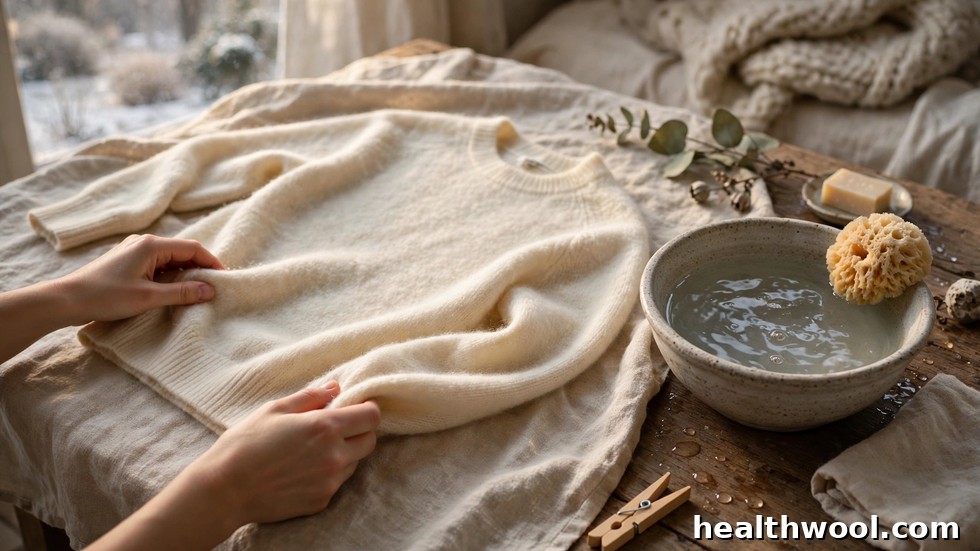
Work on a clean, flat surface large enough to lay the sweater out fully. A bed covered with dry towels works well. Keep your measurements nearby, and check them as you reshape. It is far easier to adjust a damp sweater than to fix a dry one, so do your shaping while the wool is damp, and then leave it completely alone until it is dry.
Be patient about drying time. A thick wool sweater can take a full day or even two to dry flat, depending on the room. Resist the urge to speed things up with a radiator or hairdryer. Slow, even drying gives the fibres time to settle in their new shape.
Fixing a Stretched Sweater
Stretched wool often responds well to a careful re-wash and reshape. Fill a basin with lukewarm water and a little wool detergent, and submerge the sweater gently. Let it soak for about twenty minutes, without agitating it. Lift it out carefully, supporting its full weight so it does not stretch further under its own wet weight.
Roll the sweater in a dry towel and press firmly to remove water. Then lay it flat on fresh dry towels. Now comes the important part: gently push the fabric back into shape. If the body is too long, ease the hem upward, working the extra length evenly across the width rather than bunching it in one place. If the sleeves are too long, ease them shorter in the same way. Pin the shape lightly with rust-proof pins if it helps, or simply smooth it into place and let the towels hold it.
For a sweater that is stretched mainly at the cuffs or hem, you can focus your attention there. Dampen just those areas, gently work them smaller with your fingers, and let them dry flat. Ribbed cuffs often spring back well with this treatment. If the whole sweater is baggy, a slightly warmer — but still not hot — soak can help the fibres relax and contract a little, but test cautiously and never use boiling water.
Fixing a Shrunken Sweater
A mildly shrunken sweater can sometimes be stretched back, little by little. The classic home method uses lukewarm water with a small amount of gentle conditioner or wool soak added. The conditioner helps relax the fibres, making them more pliable. Soak the sweater for twenty to thirty minutes, then lift it out gently and press out the water with towels, without wringing.
Lay the sweater flat and begin to stretch it gently, section by section. Pull the body wider, then longer, working evenly and slowly. Do not yank. Think of coaxing rather than forcing. Stretch a little, smooth it flat, stretch a little more. If you are aiming for a specific size, check your measurements often. It is easy to over-stretch one side, so compare left and right as you go.
Some people find it helps to wear the damp sweater for a short while to shape it to the body, but this can feel uncomfortable and risks uneven stretching. Flat reshaping gives you more control and is kinder to seams. Once you are happy with the shape, leave the sweater to dry flat, checking once or twice that it has not sprung back as it dries. If it has, you can repeat the process once more.
Be realistic about heavily felted wool. If the fabric feels thick, stiff, and matted, and the sweater has lost a lot of size, it may only recover a little. Repeated aggressive stretching risks tearing the fabric. In that case, it is better to accept a smaller improvement than to damage a garment you still love.
Dealing With Specific Problem Areas
Elbows that have gone baggy, a neckline that has stretched wide, and sleeves of different lengths are common complaints. Baggy elbows often improve with a targeted damp reshape: dampen the area, gently work the excess fabric back toward the seam, and dry flat with the sleeve straight. A stretched neckline can be helped by dampening it and easing it smaller, then drying it flat with the neckline in the shape you want. If a neckline keeps stretching, a loose stitch or a soft ribbon sewn inside can support it in future, though that is a sewing job best done carefully.
Uneven sleeves are often the result of one sleeve being pulled more than the other during washing or drying. Measure both, dampen the shorter one, and gently stretch it to match, or ease the longer one shorter. Small differences of a centimetre or two are normal and usually unnoticeable when worn.
Pilling, the small balls of fibre that gather on wool, often appears alongside stretching or shrinkage. A gentle fabric comb or a wool shaver, used lightly, can tidy the surface without damaging the knit. Always test on a hidden area first, and work in one direction.
Preventing the Problem Next Time
Once you have rescued a sweater, a few habits will keep it in shape. Always wash wool by hand in lukewarm water, or use a gentle wool cycle in a mesh bag if the label allows machine washing. Never hang a wet wool sweater: always dry it flat, reshaped to its measurements. Fold knitwear for storage rather than hanging it, since hangers slowly stretch shoulders out of shape.
Between washes, air your sweater instead of washing it every time. Wool naturally resists odour, and a day of airing on a hanger in fresh air often refreshes it completely. When you do wash, use a gentle detergent, keep the water lukewarm, and handle the wet garment with support. These small habits are the difference between a sweater that lasts one winter and one that lasts ten.
Finally, keep a note of your sweater’s measurements when it is new, or when it fits perfectly. A quick photo with a tape measure, or a note tucked in the drawer, makes future reshaping far easier. You will thank yourself the next time a laundry mishap happens.
When to Let Go, and When to Repurpose
Not every sweater can be saved, and that is all right. If the wool is heavily felted, torn in several places, or has thinned to transparency, forcing it back into shape may only frustrate you. Repurposing is a kinder ending: felted wool makes warm mittens, hot-water bottle covers, cushion fronts, and even slippers. A sweater with good sleeves but a damaged body can become a pair of leg warmers. Giving the wool a second life is not failure; it is good stewardship of a natural fibre.
If the sweater has sentimental value — a gift, a hand-knit from a relative — consider asking a skilled knitter or a textile repairer for advice before attempting a rescue. They may spot a repair, such as re-knitting a cuff or grafting a section, that a home soak cannot achieve. Sometimes professional help is the gentlest option of all.
Key Takeaways
- Stretched wool usually comes from wet weight and hanging; shrinkage usually comes from heat and agitation, sometimes with felting.
- Always use lukewarm water, gentle detergent, no wringing, and flat drying — sudden temperature changes and rough handling make things worse.
- Reshape stretched sweaters by easing excess length evenly while damp; relax shrunken sweaters with a gentle soak and slow, even stretching.
- Measure before and during reshaping, work section by section, and allow a full day or more for flat drying.
- Prevent repeats: wash gently, dry flat, fold for storage, and air wool between washes instead of overwashing.
- Heavily felted or damaged wool may only partly recover — repurposing it is a good, sustainable second life.
Try a free calculator
Match this guide with a number: Tog Calculator · Weighted Blanket Calculator · Sleep Cycle Calculator



Disclaimer: Content on HealthWool.com is for informational, lifestyle, and thermal wellness purposes only. It is not a substitute for professional medical advice, diagnosis, or treatment.