
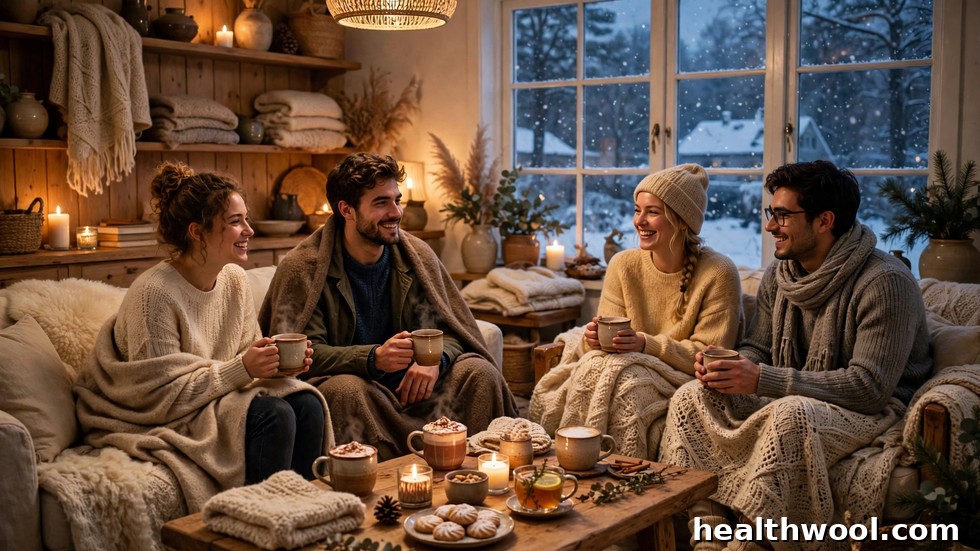
There is a Danish word with no direct English translation that has travelled the world in recent years: hygge, pronounced roughly “hoo-gah.” It is often described as cosiness, but that translation misses something. Hygge is not just a warm room or a soft blanket. It is a feeling — of contentment, togetherness, and quiet pleasure in simple things — and the Danes have made it something of a national art form, particularly in winter, when the days are short, dark, and cold.
Denmark consistently ranks among the happiest countries in the world in international surveys, despite winters that are long, grey, and often wet. Hygge is frequently offered as part of the explanation. Whether or not one concept can explain a nation’s wellbeing, the practices behind hygge offer something genuinely useful for anyone facing a long winter: a way of shaping the dark months around warmth, connection, and small daily pleasures rather than simply enduring them.
This article explores hygge as a lifestyle idea — a set of habits and attitudes you can try at home. It is general wellbeing education, not a treatment for any health condition, and if winter is affecting your mood significantly, speaking to a healthcare professional is always a sensible step.
What Hygge Actually Means
Hygge comes from an old Norwegian word meaning wellbeing, and in modern Danish it describes a quality of atmosphere and togetherness. A hyggelig evening might involve friends gathered around a table with candles lit, simple food, warm drinks, and no particular agenda. A hyggelig afternoon alone might be a favourite chair, a wool blanket, a good book, and rain against the window.
Several qualities recur in descriptions of hygge. It is unhurried — nobody is checking the clock or rushing to the next thing. It is unpretentious — the food is hearty rather than fancy, the setting is comfortable rather than impressive. It is warm, in both the literal sense of candles, blankets, and firelight, and the social sense of being with people you like. And it is present-focused: attention is on the moment, the conversation, the taste of the food, rather than on phones, work, or worries about tomorrow.
Importantly, hygge is not about buying things. Bookshops are full of hygge-themed products — candles, cushions, chunky knitwear — and some of them are lovely. But the heart of hygge is not consumption. It is attention: choosing to make an ordinary evening feel special, and giving yourself permission to enjoy it without guilt.
Why Winter Is Hygge Season
Winter is when hygge comes into its own, and the reasons are practical as much as cultural. Short days and cold weather naturally push life indoors. Rather than fighting that — lamenting the darkness, resenting the cold — hygge reframes it. Darkness becomes an excuse for candlelight. Cold becomes a reason for blankets, warm drinks, and slow-cooked food. Being indoors becomes an opportunity for closeness rather than confinement.
This reframing matters for general wellbeing. Psychologists have long noted that how we interpret a situation shapes how it feels. A dark evening spent resenting the early sunset feels very different from the same evening spent deliberately enjoying candlelight and a good meal. Hygge does not change the weather, but it changes the relationship to it — and that shift, repeated over a whole winter, can make the season feel substantially kinder.
There is also a rhythm to it. Danish winter life has a seasonal structure: Advent candles, Christmas gatherings, long January evenings with friends, the gradual return of light in February. Marking the season with small rituals gives shape to months that might otherwise blur into an undifferentiated stretch of cold and dark.
Light, Warmth, and the Senses
Candlelight is almost synonymous with hygge, and for good reason. Danes burn more candles per person than almost anyone else in the world. The appeal is partly aesthetic — flickering light is inherently calming — and partly practical. In a season with little daylight, creating your own warm light in the evening changes the whole feeling of a room. Electric candles and warm-toned lamps can create a similar atmosphere if open flames are impractical or unsafe, and the principle is the same: soft, warm, low light rather than harsh overhead brightness.
Texture is the other great hygge sense. Wool blankets, knitted throws, sheepskin rugs, soft socks, and warm jumpers all contribute to a feeling of physical comfort that is hard to overstate on a cold evening. Natural textiles are particularly suited to this, because they breathe, insulate, and age gracefully — a well-loved wool blanket feels better, not worse, with years of use.
Smell and taste complete the picture. Baking bread, simmering a stew, brewing tea or spiced drinks, and the scent of pine or cinnamon in December all anchor an evening in sensory pleasure. None of this needs to be elaborate. A simple soup, fresh bread, and a pot of tea shared with one other person can be more hyggelig than an ambitious dinner party that leaves the host exhausted.
Togetherness Without Pressure
Social connection is central to hygge, but it is a particular kind of connection: low-pressure, egalitarian, and relaxed. A hyggelig gathering has no host performing and no guests judging. Everyone helps, everyone relaxes, and nobody is keeping score. Board games, long conversations, cooking together, or simply sitting companionably in the same room all count.
This matters in winter, when social lives can shrink. Cold weather, dark evenings, and the effort of going out all discourage meeting up, and isolation can quietly build over months. Hygge offers a gentler model of socialising: small, frequent, easy gatherings rather than grand occasions. Inviting one friend for tea is less daunting than organising a party, and repeated small invitations build a steadier social rhythm through the season.
Solitude has its place in hygge too. A quiet evening alone with a book, a bath, or a walk in crisp air can be deeply hyggelig, provided it is chosen rather than imposed. The distinction matters: chosen solitude restores, while unwanted isolation drains. If winter solitude is starting to feel heavy rather than restful, reaching out — to a friend, a community group, or a professional — is a sign of sense, not weakness.
Bringing Hygge Into Your Own Winter
You do not need to be Danish, or to redecorate your home, to try hygge. Start small, and start with what you already enjoy. A few practical ideas:
Make One Evening Ritual
Choose a simple, repeatable evening habit: lighting a candle or lamp at dusk, making a pot of tea, putting on soft socks and a favourite jumper, and spending thirty minutes with a book or a conversation instead of scrolling. Repeating it nightly turns it from an activity into a ritual, and rituals give structure to dark evenings.
Lower the Bar for Gathering
Invite someone over for something easy — soup, tea, a walk, a board game — and mean it when you say “nothing fancy.” The easier you make it, the more often it will happen, for you and for them.
Embrace the Season’s Pleasures
Winter has its own foods, walks, and comforts: root vegetables, slow cooking, frosty mornings, early sunsets, the smell of rain on cold air. Noticing and enjoying these, rather than counting the days until spring, is the core hygge move.
Put the Phone Down
Hygge and constant phone-checking do not mix well. Presence — attention to the people and the moment in front of you — is what turns a pleasant room into a hyggelig one. Even an hour of phone-free evening time can change the texture of a night.
Key Takeaways
- Hygge is a Danish concept describing a feeling of cosy contentment, warmth, and togetherness, especially valued in winter.
- It is about attention and atmosphere — candlelight, natural textiles, simple food, unhurried time — rather than buying products.
- Winter suits hygge because it reframes darkness and cold as reasons for warmth, light, and closeness rather than things to endure.
- Low-pressure togetherness — small, easy gatherings with friends — helps counter the social shrinking that winter can bring.
- Chosen solitude can be restorative, but if winter low mood feels heavy or persistent, speaking to a healthcare professional is a sensible step.
- Start small: one evening ritual, one easy invitation, and one seasonal pleasure noticed each day.
Hygge will not lengthen the days or warm the weather. What it offers is subtler and, in its way, more useful: a way of living winter well, finding warmth and company and quiet pleasure in the middle of the dark season. Light a candle, put the kettle on, invite someone over — and let the winter evening be something to enjoy, not just to get through.
Try a free calculator
Match this guide with a number: Tog Calculator · Weighted Blanket Calculator · Sleep Cycle Calculator



Disclaimer: Content on HealthWool.com is for informational, lifestyle, and thermal wellness purposes only. It is not a substitute for professional medical advice, diagnosis, or treatment.