You have probably heard that screens before bed are bad for sleep, and that blue light is the culprit. The real story is a little more interesting — and a little more forgiving — than the simple version. Blue light is only part of the problem, and a screen curfew is only part of the solution. Understanding how evening light interacts with your body’s sleep signals can help you design a curfew that actually works for your life.
This article explains, in general educational terms, how light affects melatonin, the hormone associated with sleepiness, and how a practical screen curfew can help. It is lifestyle information, not medical advice. If sleep problems persist or worry you, speak to a qualified professional.
Melatonin and Your Body Clock
Melatonin is a hormone your body produces naturally, mainly in the evening, as part of the daily rhythm that tells you when to feel sleepy and when to feel alert. Darkness encourages its production; bright light, especially in the evening, can delay it. That is why humans evolved to feel drowsy after sunset and alert after sunrise — light was the original timekeeper.
Modern life complicates this. Our evenings are now filled with bright artificial light, and screens add a concentrated dose right where we look. The result can be a delayed feeling of sleepiness: you feel wide awake at midnight even though you are tired, because your body’s evening signals have been pushed later. This does not mean screens single-handedly ruin sleep, but they can shift its timing, which matters if you need to be up early.
Is Blue Light Really the Main Problem?
Blue wavelengths of light have a stronger effect on melatonin production than warmer wavelengths, and screens do emit blue light. That is the basis for blue-light filters and amber glasses, and they can help a little. But research and general guidance suggest the full picture is broader: overall brightness matters too, and so does what you are doing on the screen.
An exciting video, an argument in a group chat, or a work email that raises your stress will keep you awake regardless of the colour of the light. Mental stimulation and emotional engagement are powerful wakefulness signals on their own. So a blue-light filter on a phone you are still scrolling anxiously at midnight is unlikely to solve the problem by itself — the content and the engagement matter as much as the light.
What Actually Helps: Less Light, Less Stimulation
The most effective evening screen habits tackle both light and stimulation together. Dimming screens, using night-mode settings, and reducing overall room lighting in the evening all lower the light signal. More importantly, switching from interactive, stimulating content to calmer activities — or to no screens at all — removes the mental alertness that keeps you awake. A screen curfew works best when it addresses both halves.
Designing a Screen Curfew That Sticks
A curfew that is too strict will fail on the first busy evening, so design one you can actually keep. A common starting point is no screens for the last 30 to 60 minutes before bed, with phones charging outside the bedroom. If that feels too big a jump, start with 20 minutes, or with one screen-free evening activity, and build from there.
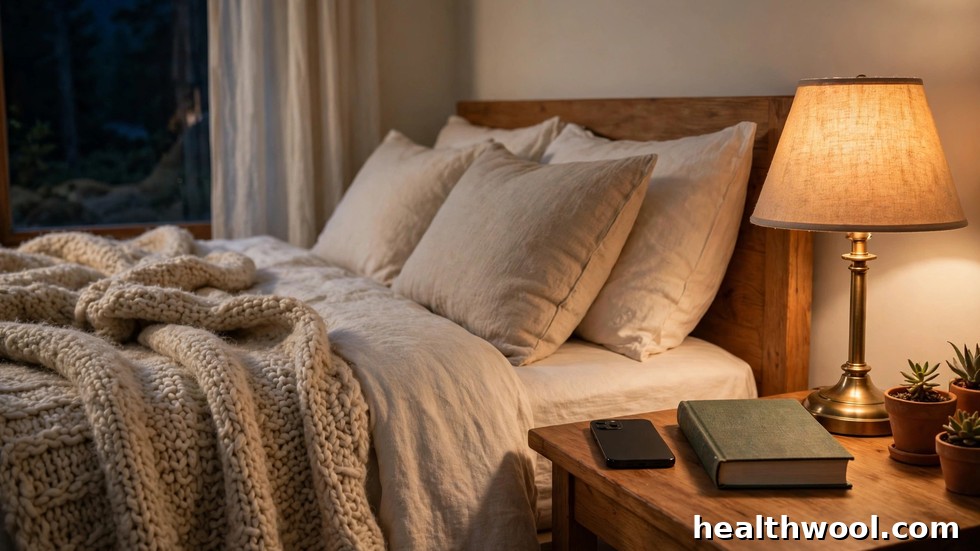
Make the curfew easier by replacing screens rather than just removing them. Keep a book by the bed, a puzzle or journal on the nightstand, or a calming playlist ready to play from a speaker instead of a phone. When the alternative is already there and appealing, you are far less likely to reach for the phone out of habit.
Set a practical boundary for the whole household if you share your home. A charging station in the living room, where everyone’s phones sleep overnight, removes temptation and makes the curfew a shared habit rather than a personal struggle. If work genuinely requires late availability, agree on a specific exception — for example, one device on silent for genuine emergencies — rather than leaving the whole curfew vague.
Daytime Light: The Other Half of the Equation
Evening light matters, but daytime light matters too. Getting bright natural light in the morning and during the day strengthens your body’s daily rhythm, which makes the evening wind-down work better. A morning walk, breakfast near a window, or time outdoors at lunch all reinforce the contrast between bright days and dark nights that your body clock relies on.
If you spend all day indoors under dim lighting and then face bright screens all evening, your body receives a confusing signal: dim days, bright nights. Reversing that pattern — bright days, dim evenings — is one of the simplest rhythm-supporting changes you can make, and it costs nothing.
Special Cases: Shift Work, Travel, and Teenagers
Not everyone can keep a neat evening curfew. Shift workers, parents of young children, and teenagers all face different constraints, and rigid advice can feel unhelpful. For shift workers, the principle still applies but the timing shifts: dim light and screens before your sleep time, whatever hour that is, and bright light during your waking hours. Blackout curtains and a consistent pre-sleep routine matter even more when your schedule runs against the sun.
For teenagers, whose body clocks naturally run later, a negotiated curfew — agreed together rather than imposed — tends to work better than a ban that gets circumvented. And for travellers crossing time zones, managing light exposure is a well-known way to help your body adjust, though it is worth reading dedicated jet-lag guidance for your specific trip.
Making Evenings Less Screen-Dependent
A curfew is easier to keep if your evenings do not revolve around screens in the first place. Look for the moments when you reach for a phone out of habit rather than purpose: waiting for the kettle, sitting on the sofa after dinner, lying in bed before sleep. Each of those moments has a non-screen alternative that can be just as satisfying once it becomes habitual — a book by the kettle, a board game or conversation after dinner, a paperback on the nightstand.
Consider a “one screen” rule for the evening: television only, or music only, rather than television plus phone plus tablet simultaneously. Multiple screens multiply both light and stimulation, and they fragment your attention in a way that leaves you feeling wired rather than rested. Single-tasking an evening activity — really watching a programme, really listening to music — is often more enjoyable as well as calmer.
It also helps to make your phone physically less inviting in the evening. Turn it face down, switch on Do Not Disturb, or place it in another room during the wind-down hour. Willpower is unreliable when you are tired; environment design is not. Small frictions — a phone in another room, a charger outside the bedroom — do more work than good intentions alone.
Finally, be kind to yourself about slip-ups. One late night of scrolling does not undo weeks of better habits, just as one good night does not fix everything. Notice what triggered the slip — boredom, stress, a late work message — and adjust the routine around that trigger, rather than blaming yourself and abandoning the curfew entirely.
When Screens Are Not the Real Problem
If you have kept a screen curfew for several weeks and your sleep has not improved, something else may be going on. Stress, an uncomfortable bed, a noisy or bright bedroom, caffeine late in the day, or an underlying sleep issue can all outweigh screen habits. Treat the curfew as one tool among many, not a cure-all, and consider your whole sleep picture — including a conversation with a qualified professional if difficulties persist.
Key Takeaways
- Evening light can delay melatonin production and push sleepiness later into the night.
- Blue light matters, but brightness and stimulating content matter just as much.
- A screen curfew of 30 to 60 minutes before bed, with phones charging outside the bedroom, is a realistic starting point.
- Replace screens with an appealing alternative, like a book or journal, rather than just removing them.
- Bright natural light during the day strengthens the rhythm that makes evening wind-down work.
- If a curfew does not help after several weeks, look at the wider sleep picture and seek professional advice if needed.
Try a free calculator
Match this guide with a number: Tog Calculator · Weighted Blanket Calculator · Sleep Cycle Calculator



Disclaimer: Content on HealthWool.com is for informational, lifestyle, and thermal wellness purposes only. It is not a substitute for professional medical advice, diagnosis, or treatment.