If you have ever wondered why wool bedding can feel comfortable on a damp night, or why a wool blanket seems to stay fresh longer than you expect, part of the answer lies in a natural substance called lanolin. Lanolin is the waxy oil produced by sheep’s skin, and it remains in wool fibres in small amounts after processing. It is one of the quiet, natural features that give wool its distinctive feel and performance.
This article explains what lanolin is, how it relates to wool’s moisture behaviour, and what it means — and does not mean — when you are choosing wool bedding. It is general educational information about textiles, not medical advice, and it makes no claims about treating or preventing any condition.
What Is Lanolin?
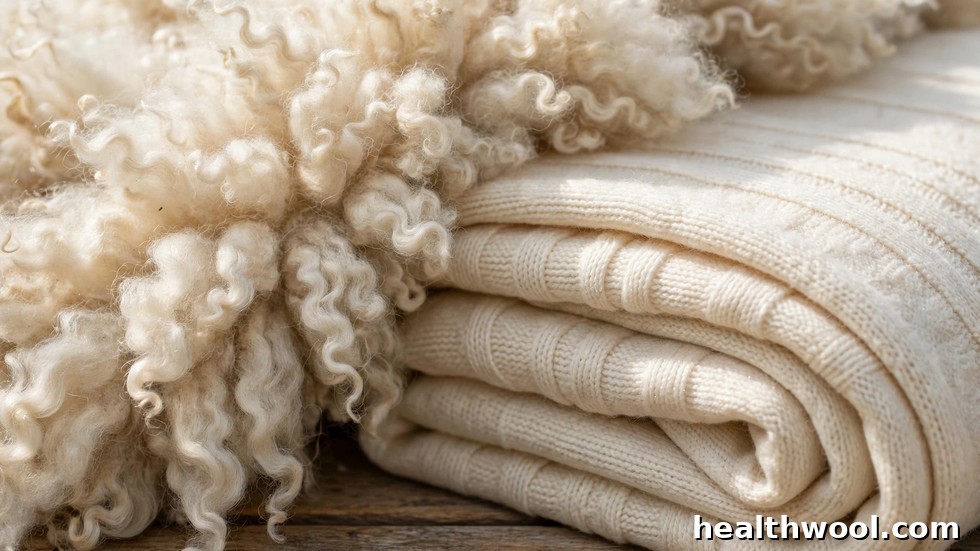
Lanolin is a natural wax secreted by the sebaceous glands in sheep’s skin. It coats each wool fibre and helps protect the sheep from rain and damp weather, which is rather useful for an animal that lives outdoors year-round. When wool is sheared and processed into yarn and fabric, some lanolin remains in the fibres, though the amount varies depending on how thoroughly the wool has been washed and processed.
You may have encountered lanolin elsewhere: it is used in some skin-care products, leather conditioners, and rust-prevention treatments, precisely because of its water-repelling and conditioning qualities. In wool bedding, it is present in modest amounts, working quietly alongside the structure of the fibre itself rather than acting as a waterproof coating.
How Lanolin Relates to Moisture Resistance
Wool fibres have a fascinating two-part relationship with moisture. The outside of each fibre repels liquid water — a drop of water will bead on the surface rather than soaking straight in — while the inside of the fibre can absorb a significant amount of water vapour. Lanolin contributes to that outer water-repelling quality, helping liquid moisture roll off or sit on the surface rather than saturating the fibre immediately.
In practical bedding terms, this means a wool blanket can cope with small amounts of moisture — a humid night, a little perspiration, a damp room — without feeling wet or clammy. The fibre absorbs vapour gradually, releases it as air circulates, and the surface resists liquid soaking in. The result is bedding that feels drier and more comfortable across a range of conditions than a material that either soaks moisture up instantly or traps it against your skin.
It is important to keep expectations realistic. Lanolin does not make wool waterproof. A wool blanket will still get wet if soaked, and it still needs proper drying and care. What lanolin offers is a degree of natural moisture resistance that helps wool manage everyday dampness gracefully, not immunity from water.
Lanolin, Breathability, and Comfort
Moisture resistance is only half the story. Wool’s comfort also comes from breathability: air moves through wool fabrics, carrying moisture vapour away. Lanolin does not block this, because it coats individual fibres rather than sealing the fabric like a plastic layer would. That combination — surface resistance to liquid, plus internal absorption of vapour, plus airflow through the fabric — is what makes wool feel comfortable in both humid and dry conditions.
This is one reason wool bedding suits people who sleep warm or live in changeable climates. On a humid summer night, wool can absorb vapour and feel less clammy than a non-absorbent fabric. On a cold, damp winter night, it resists feeling wet while still insulating. No single material is perfect for everyone, but this balanced moisture behaviour is a genuine, distinctive wool quality.
Does Processing Affect Lanolin Content?
Yes, and this is worth knowing when you shop. Wool that has been heavily scoured — washed aggressively to remove all oils — will contain less lanolin than wool that has been processed more gently. Some manufacturers deliberately retain more lanolin for its natural qualities, while others remove more of it to produce a very clean, soft, hypoallergenic-feeling fibre. Neither approach is inherently better; they suit different preferences.
If lanolin content matters to you, look for product descriptions that mention it, or ask the manufacturer. Be aware, though, that lanolin levels are rarely stated precisely on bedding labels, and the overall construction of the blanket — weave, weight, and fibre quality — matters at least as much as the exact lanolin content. Judge bedding by how it feels and performs, not by a single ingredient claim.
A Note on Sensitivities
Most people have no issue with the small amounts of lanolin in wool bedding, but a small number of people are sensitive to lanolin or to wool itself. If you have a known lanolin sensitivity, or you develop skin irritation from a wool product, stop using it and consult a qualified professional if needed. There are many excellent bedding materials available, and the right one is the one that feels comfortable for you personally, without irritation.
Caring for Wool to Preserve Its Qualities
How you wash wool affects its lanolin and its performance. Harsh detergents, very hot water, and aggressive machine cycles can strip lanolin and damage fibres, leaving wool feeling harsher and less moisture-resistant. Gentle care preserves it: follow the care label, use a wool-friendly detergent, wash in cool or lukewarm water where washing is allowed, and dry flat or on a line rather than in high heat.
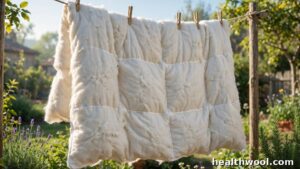
Often, wool bedding does not need washing as frequently as cotton, because wool’s moisture management and natural freshness mean it airs out well. Regular airing — draping a blanket over a chair near an open window — refreshes it between washes and helps preserve both the fibres and their natural oils. When you do wash, dry the item fully before storing or using it, since damp wool stored away can develop a musty smell.
Over years, lanolin content will gradually decline with washing and use, which is normal. A well-cared-for wool blanket can still last many years and remain comfortable long after its original lanolin has diminished, because the fibre structure itself continues to manage moisture well. Think of lanolin as a helpful bonus on top of wool’s inherent qualities, not the sole reason wool works.
Lanolin in Wool Care Products
You may come across wool washes and conditioners that contain lanolin, marketed as a way to replenish what washing removes. These can be a nice touch for pure wool items, leaving them feeling softer and helping maintain their natural qualities. They are optional rather than essential, and they are not suitable for every item — always check the care label and the product instructions, and avoid them on items blended with fibres that should not be treated this way.
A simpler approach is simply to wash wool gently and infrequently, airing it often instead. That alone preserves much of its natural character for years. If you do try a lanolin-enriched wash, test it on a small, inconspicuous area first, especially if you have sensitive skin, and make sure the item is fully rinsed and dried before use.
Choosing Wool Bedding With Moisture in Mind
If moisture resistance is a priority for you — perhaps you sleep warm, live in a humid climate, or want bedding that copes well with damp seasons — wool is a strong candidate. Look for a weight appropriate to your climate, a weave that feels breathable rather than dense and airless, and care instructions you can realistically follow. A lighter wool blanket that you will wash gently and air regularly will serve you better than a heavy one that is difficult to care for.
Pair wool bedding with a breathable mattress protector and natural-fibre sheets so moisture can move through the whole bedding stack, not just one layer. And keep your bedroom ventilated: even the best wool cannot compensate for a room with no airflow and serious damp problems, which should be addressed at their source.
Key Takeaways
- Lanolin is a natural waxy oil from sheep’s skin that remains in wool fibres after processing.
- It helps wool’s surface repel liquid water, while the fibre interior absorbs moisture vapour.
- This combination gives wool balanced moisture management — drier-feeling in humidity, insulating in damp cold.
- Lanolin does not make wool waterproof, and its content varies with processing.
- Gentle washing and regular airing preserve lanolin and wool’s natural qualities.
- A small number of people are sensitive to lanolin or wool; choose bedding that feels comfortable for you.
Try a free calculator
Match this guide with a number: Tog Calculator · Weighted Blanket Calculator · Sleep Cycle Calculator


Disclaimer: Content on HealthWool.com is for informational, lifestyle, and thermal wellness purposes only. It is not a substitute for professional medical advice, diagnosis, or treatment.