There is a reason hikers, skiers, and anyone who spends time outdoors in changeable weather swears by layers. A single thick coat is either too warm or too cold; layers can be added, removed, and adjusted as conditions change. Your bed works the same way. A single heavy duvet forces you to choose one level of warmth for the whole night, even though your body temperature, your room temperature, and your need for warmth all shift between bedtime and morning.
Layering blankets — using two or more lighter layers instead of one heavy one — gives you control without fully waking up. You can push a layer aside with a foot, pull a throw up over your shoulders, or add a blanket in the early hours when your body is coolest. That flexibility is why layered bedding often feels more comfortable than a single duvet, even when the total warmth is similar. This article explains how layering works, which combinations suit different sleepers, and how to build a layered bed that looks inviting rather than messy.
Why One Heavy Duvet Often Fails at 3 A.M.
Your body temperature is not constant through the night. It falls in the evening, reaches its lowest point in the early morning, often around 4 or 5 a.m., and then begins to rise before waking. Your room temperature may also fall overnight if heating switches off, or rise if the house retains heat. A single duvet chosen for bedtime warmth may therefore be too warm at midnight and too cool by morning, or vice versa.
With a single duvet, your only options when you get too warm are to throw it off entirely — which often leaves you chilled within minutes — or to stick a leg out, which helps a little but does not solve the problem. When you get too cold, your only option is to pull the duvet tighter or reach for a blanket that may not be within arm’s reach. Each adjustment tends to wake you more fully than a small, half-asleep adjustment to a single layer would.
Layering solves this by breaking warmth into steps. Instead of one big jump from warm to cold, you get several small steps. Removing a thin throw reduces warmth a little; adding a wool blanket increases it a little. Those small steps match the small changes in your body temperature through the night, so you can stay in that drowsy, half-asleep state while adjusting, rather than waking up to renegotiate your entire bed.
The Science of Trapped Air Between Layers
Insulation works by trapping still air. Each blanket layer traps air within its own fibres, and — crucially — also traps a thin layer of air between itself and the next layer. Those air gaps add insulation beyond what the layers would provide individually, which is why two light blankets can feel warmer than you might expect. The effect is similar to double glazing: two panes with an air gap insulate better than a single thick pane.
Air gaps also help with moisture. Air can move between layers, carrying water vapour away from your skin more gradually than a single dense duvet might. Wool layers are particularly good here, because wool absorbs moisture and releases it slowly, buffering humidity between layers. Cotton and linen layers breathe well, too, while a tightly woven synthetic top layer can seal moisture in, so the choice of materials for each layer still matters.
Weight distribution is another advantage. A single heavy duvet concentrates its weight in one layer, which some sleepers find restrictive. Multiple lighter layers distribute weight more evenly and drape more naturally around the body, reducing pressure points. For people who dislike a heavy feeling but still need warmth, layered light blankets can provide the same insulation with a freer, less confining feel.
Building a Layered Bed: A Practical System
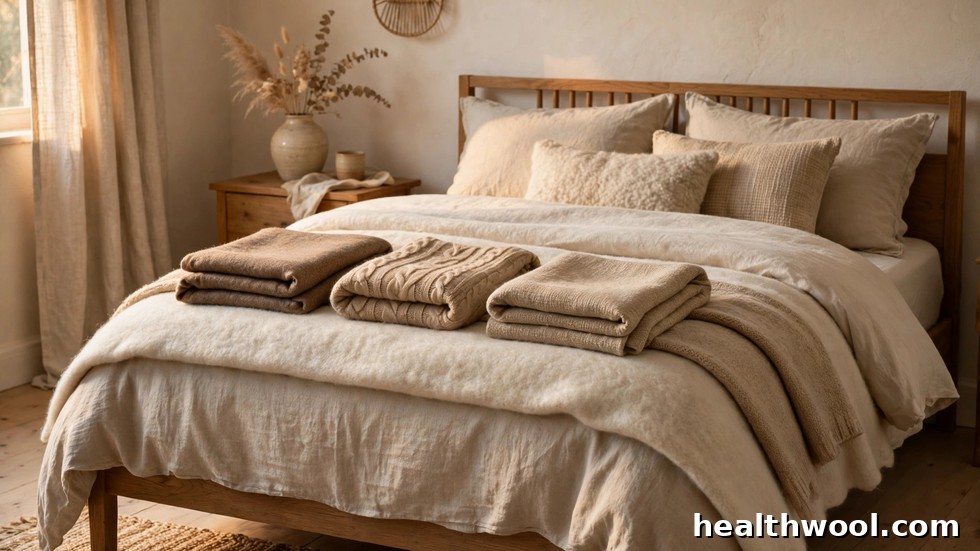
A good layered bed starts with a base layer next to your skin: a flat sheet, ideally cotton or linen, which is easy to wash and feels fresh. Over that goes your main insulating layer, often a medium-weight duvet or a wool blanket. A 7.5 or 10.5 tog duvet works well as a middle layer for most of the year, because it provides solid warmth without being so heavy that additional layers become stifling.
On top of that, add one or two adjustable layers. A wool throw or blanket is ideal for the top layer, because wool breathes, manages moisture, and adds warmth without much weight. A cotton quilt or coverlet can serve as a decorative top layer in warmer months, doubling as a light blanket when the duvet is folded away. In winter, a second wool blanket folded across the lower half or foot of the bed gives you extra warmth for your legs and feet, where many people feel cold first.
Keep an extra layer within reach, not in a cupboard. A blanket folded at the foot of the bed, or on a nearby chair, is one you will actually use at 3 a.m. A blanket stored elsewhere is a blanket you will decide you can do without, and then lie awake feeling cold. The same applies in reverse: if you tend to overheat, keep the top layer light enough to push aside easily, rather than trapping yourself under a heavy coverlet you cannot move without waking.
Layering for Different Sleepers and Seasons
Warm sleepers should start light: a sheet plus a light duvet or a single wool blanket, with a throw nearby for the early-morning dip. They should avoid a heavy top layer that they will only kick off, and favour breathable materials throughout. Cold sleepers should start with a medium duvet plus a wool blanket, with a second blanket at the foot of the bed. They may also benefit from warm sleepwear and socks, which add warmth without adding bedding weight.
Couples with different temperature needs can layer individually, even on a shared bed. Each person can have their own top throw or blanket over a shared duvet, or use separate duvets entirely with individual layers on top. This avoids the nightly negotiation over a single duvet and lets each person adjust without disturbing the other. It may look less like a show-home bed, but it sleeps considerably better.
Seasonal changes become simpler with layering. In summer, the bed might be just a sheet and a light cotton coverlet. In spring and autumn, add the medium duvet. In winter, add the wool blanket and the foot throw. Instead of buying and storing three separate duvets, you keep the same set of layers and change the combination. That saves storage space, money, and the annual ritual of swapping duvets and wondering where you stored the winter one.
Materials That Layer Well Together
Not every combination layers well. Wool layers beautifully with cotton and linen, because all three breathe and manage moisture. A wool blanket over a cotton duvet cover, with a linen or cotton sheet underneath, is a classic combination that works in most climates. Silk or a smooth cotton coverlet as a top layer adds a decorative finish without adding much heat, which suits warm sleepers who want the look of a dressed bed without the warmth of an extra blanket.
Be cautious with synthetic top layers, especially tightly woven or waterproof ones, because they can trap moisture from the layers beneath. If you use a polyester throw for decoration, keep it as a daytime cover and fold it back at night, rather than sleeping under it. Similarly, a heavy, dense quilt as a top layer over an already warm duvet can quickly become too hot; choose lighter, more breathable top layers and let the duvet do the heavy insulating work.
Texture matters for comfort, too. Layers that slide smoothly over each other — a cotton sheet under a wool blanket, for example — are easier to adjust half-asleep than layers that grip and bunch. If your layers constantly tangle, try a smoother sheet or a lighter top layer, and avoid tucking every layer in tightly at the foot. A loosely tucked bed is easier to adjust and feels less restrictive than one tucked like a hospital corner on all sides.
Common Layering Mistakes
The most common mistake is adding too many heavy layers at once, turning the bed into a hot, immobile mound. Layering is about flexibility, not bulk. Two or three well-chosen layers beat five heavy ones. Another mistake is using layers that are all the same material and weight, which gives you no real adjustment steps — removing one identical layer changes warmth too much or too little, depending on how many you started with.
A third mistake is neglecting the pillow and mattress. Layering only the top of the bed while sleeping on a heat-retaining mattress or a pillow that traps warmth around your head leaves half the problem unsolved. A breathable pillow and a mattress that allows airflow complement layered bedding, because heat escapes from the sides and below as well as from above. Finally, do not forget the room: layered bedding in a hot, stuffy room will still overheat you. Keep the bedroom cool and ventilated, and let the layers do the fine-tuning.
Key Takeaways
- Layering breaks warmth into adjustable steps, matching your body’s changing temperature through the night.
- Air trapped between layers adds insulation, and breathable materials help moisture escape.
- A good system is a sheet, a medium duvet, and one or two wool throws or blankets you can add or remove half-asleep.
- Keep an extra layer at the foot of the bed, within reach, for early-morning cold.
- Warm sleepers should start light; cold sleepers should add a wool blanket and a foot throw.
- Two or three breathable layers beat a single heavy duvet or a pile of heavy blankets.
A layered bed is a forgiving bed. It does not demand that you predict your temperature at midnight when you climb in at ten, and it does not punish you for getting it slightly wrong. Start with a sheet and a medium duvet, add a wool throw you love, and keep a spare blanket at the foot of the bed. Within a week, you will find yourself adjusting layers without really waking — and that quiet, half-asleep comfort is exactly what good bedding is for.
Try a free calculator
Match this guide with a number: Tog Calculator · Weighted Blanket Calculator · Sleep Cycle Calculator



Disclaimer: Content on HealthWool.com is for informational, lifestyle, and thermal wellness purposes only. It is not a substitute for professional medical advice, diagnosis, or treatment.