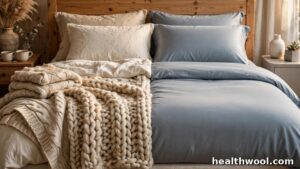
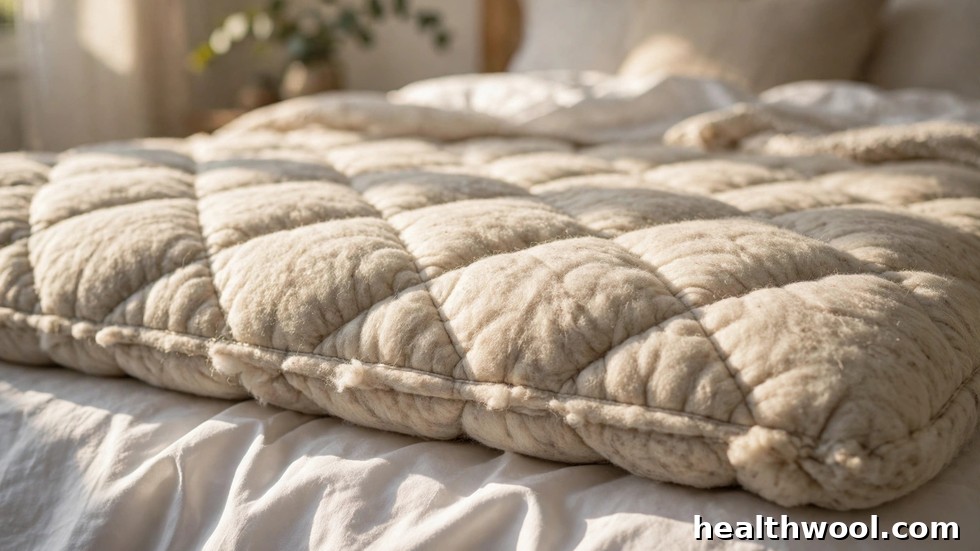
A mattress topper is one of the simplest upgrades you can make to your bed. It sits on top of your mattress, under your fitted sheet, and changes the surface you actually sleep on — without the cost or upheaval of replacing the mattress itself. Among the many materials available, wool has a loyal following, and for good reason: it offers a rare combination of gentle cushioning and natural temperature management.
This guide looks at what wool mattress toppers do well, where they have limits, and how to choose one that suits your body, your mattress, and the way you sleep. As always, this is general lifestyle information, not medical advice. If you have ongoing pain, pressure sores, or a condition that affects how you sleep, a qualified professional can advise you personally.
What a Mattress Topper Actually Does
Think of your mattress as the structure and your topper as the comfort layer. The mattress provides support; the topper softens the surface, smooths out minor lumps or firm spots, and adds a layer of material between you and the mattress. A good topper can make a too-firm mattress feel kinder, and it can refresh a mattress that has started to feel tired but is not yet ready to replace.
Toppers cannot fix everything. A mattress that sags deeply in the middle, or one whose springs have failed, will still sag underneath a topper. But for a mattress that is structurally sound yet feels a little hard, uneven, or uninviting, a topper is often exactly the right intervention — and much cheaper than a new bed.
How Wool Helps With Pressure Relief
Pressure relief is about spreading your weight more evenly so no single point — typically your hips, shoulders, or heels — bears too much of it. Wool fibres are naturally springy and resilient. When compressed, they push back gently rather than collapsing flat, which helps distribute weight across a wider area. The result is a surface that feels cushioned without the sinking, stuck feeling some people get from dense foam.
That gentle give matters most for side sleepers, whose hips and shoulders press into the bed more directly. A wool topper adds just enough softness to ease those pressure points while still letting the mattress underneath do the supporting. Back and stomach sleepers benefit too, though they generally need a thinner topper so their spine stays in a comfortable, neutral position.
Thickness: How Much Cushioning Do You Need?
Wool toppers usually range from about 2 cm of light padding to 7 cm or more of deep, plush cushioning. A thinner topper is ideal if your mattress is already fairly comfortable and you mainly want a fresher, softer surface. A thicker topper suits a firm mattress or someone who wants a noticeably plusher feel. Very thick toppers can change how your mattress supports you, so if you have back concerns, err on the thinner side and see how you sleep before going thicker.
Thermal Balance: Warm in Winter, Comfortable in Summer
Temperature regulation is where wool really earns its reputation. Wool fibres can absorb a significant amount of moisture relative to their weight before they start to feel damp, and they release that moisture gradually as air circulates. In practice, this means a wool topper helps buffer the small temperature and humidity changes that happen through the night, rather than swinging between too warm and too cool.
In winter, the air trapped between wool fibres insulates you from a cold mattress, which is a common source of overnight chill. In summer, that same moisture management helps the surface feel drier and fresher than a foam layer that holds heat against your body. It will not make a hot room feel cold — no topper can do that — but many sleepers find a wool topper comfortable across more of the year than a synthetic or foam equivalent.
This year-round quality makes wool toppers a practical choice if you do not want to swap your bedding setup every season. Pair a wool topper with lighter summer covers and heavier winter layers, and the topper itself can stay put all year.
Choosing the Right Wool Topper
Start with your mattress. Measure it carefully, including the depth, because a topper adds height and your fitted sheet needs to accommodate the total. Deep-pocket fitted sheets are worth buying at the same time if your current sheets are already snug. Check how the topper attaches: elastic straps at the corners are standard and keep it from sliding, but make sure they are sturdy and easy to adjust.
Next, consider the cover. Most wool toppers have a cotton cover that keeps the wool in place and can be spot-cleaned or, in some cases, removed and washed. A washable cover is a real advantage for long-term freshness. Also check the wool itself: look for clear labelling about the wool content and origin, and be wary of toppers that are mostly synthetic filling with only a token amount of wool.
Finally, think about allergies and care honestly. Wool is often chosen by people who prefer natural materials, but if you have a known wool sensitivity, test a small sample against your skin first, or consider whether a different natural material suits you better. Most wool toppers need airing and spot cleaning rather than machine washing, so make sure that care routine fits your lifestyle before you buy.
Living With a Wool Topper
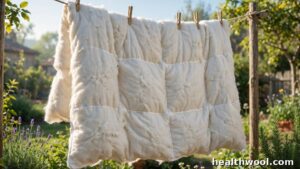
A new wool topper often feels firmer than expected for the first few nights, then softens slightly as the fibres settle. Give it at least a week before judging it. Air it regularly by pulling back the bedding in the morning, and rotate it head-to-foot every month or so to keep wear even. If it develops lumps, a gentle shake and redistribution of the filling, where the design allows, usually restores it.
Pair your topper with breathable bedding to get the full benefit. A plastic-feeling mattress protector or a non-breathable sheet on top of a wool topper will block the airflow that makes wool work well. Choose cotton or linen sheets, and a breathable protector if you need one, so moisture and heat can move through the whole stack of layers.
Wool Toppers vs Other Materials
It helps to know how wool compares with the alternatives. Memory foam toppers mould closely to your body and offer deep pressure relief, but many sleepers find them warm, and some dislike the sinking feeling. Latex toppers are springy and durable, with a more buoyant feel, but they are heavier, pricier, and not to everyone’s taste. Feather toppers feel luxuriously soft at first but tend to flatten and need frequent plumping, and they offer less consistent support over time.
Wool sits in a middle ground: gentler cushioning than foam, more temperature versatility than most synthetics, and a natural, breathable feel that many people prefer. It will not contour as deeply as memory foam, so if you want that deep cradling sensation, wool may feel too subtle. But if you want a surface that softens without swallowing you, and stays comfortable through the seasons, wool is hard to beat for the price.
Is a Wool Topper Right for You?
A wool topper is a good fit if your mattress is sound but too firm, if you want gentle pressure relief without sinking into foam, or if you would like a sleep surface that stays comfortable across the seasons. It is less suitable if your mattress has serious structural problems, if you need very deep cushioning for a specific medical reason, or if you want a topper you can throw in the washing machine every week.
Price varies widely, and the cheapest option is not always the best value. A well-made wool topper can last several years with proper care, while a thin, poorly filled one may flatten within months. Read the specifications — wool weight per square metre is a useful comparison — and check return policies so you can try it for a few nights at home.
Key Takeaways
- A wool topper softens your sleep surface and smooths minor firm spots without replacing your mattress.
- Wool’s natural springiness spreads weight gently, easing pressure on hips and shoulders.
- Wool manages moisture and temperature, feeling comfortable across more of the year than foam.
- Choose thickness by your sleeping position and mattress firmness; thinner is safer for back comfort.
- Measure for sheet depth, check corner straps, and prefer a washable cover.
- Air and rotate your topper regularly, and pair it with breathable sheets for the full benefit.
Try a free calculator
Match this guide with a number: Tog Calculator · Weighted Blanket Calculator · Sleep Cycle Calculator


Disclaimer: Content on HealthWool.com is for informational, lifestyle, and thermal wellness purposes only. It is not a substitute for professional medical advice, diagnosis, or treatment.