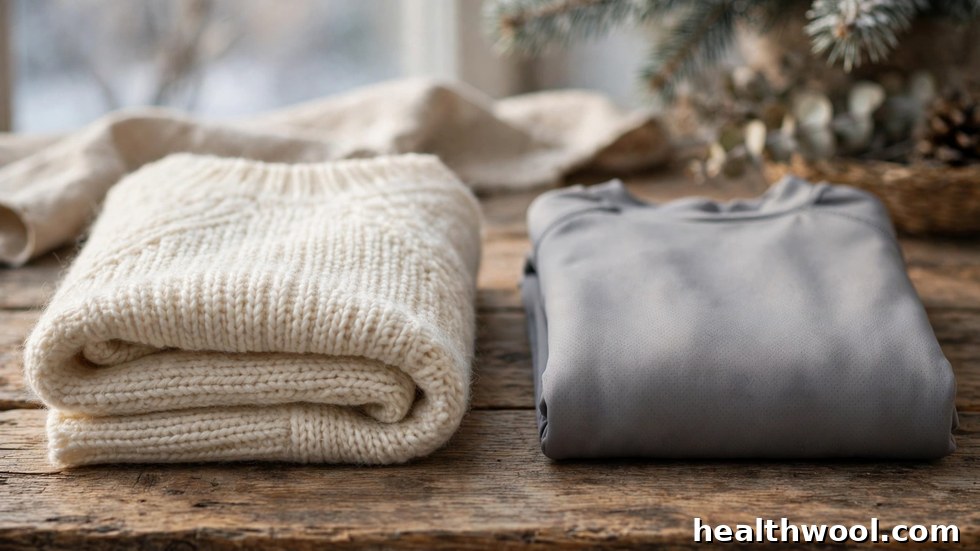
Walk into any outdoor shop in October and you will find the same friendly argument playing out on the rails: soft, natural merino wool on one side, sleek, technical synthetic polyester on the other. Both promise to keep you warm, dry, and comfortable next to your skin. Both have devoted fans who would not wear anything else. So which one actually deserves a place in your winter drawer?
The honest answer is that both are excellent, but they excel at different things. Merino wool is a natural fibre with a remarkable ability to regulate temperature and resist odour. Synthetic polyester is an engineered fibre built to move moisture fast, dry quickly, and survive hard use. The right choice depends on how you spend your winter days, how much you sweat, how often you want to do laundry, and what feels good against your skin.
This comparison looks at warmth, moisture management, comfort, odour, durability, care, cost, and sustainability, so you can choose with confidence rather than guesswork. By the end, you may decide you want one of each, which is what many experienced winter walkers end up doing.
What Makes a Good Base Layer?
Before comparing materials, it helps to remember what a base layer is for. It sits directly against your skin, so comfort is non-negotiable. It should move perspiration away from your body before it cools you down, add a little insulation without bulk, and keep working for hours, whether you are hiking, skiing, working outdoors, or simply going about a cold day.
Fit is part of the performance. A base layer that bags away from your skin cannot wick well, while one that is too tight will feel restrictive under other layers. The best base layers feel almost like a second skin: present, but easy to forget. Both merino and synthetic can achieve this, though they feel quite different when you first put them on.
Merino Wool: Nature’s Temperature Regulator
Merino wool comes from Merino sheep, whose fine, crimped fibres create tiny air pockets that trap warmth. Unlike the scratchy wool sweaters many of us remember from childhood, modern merino base layers use very fine fibres, usually under 20 microns, which feel soft and smooth against the skin. Most people who find traditional wool itchy have no trouble with good merino at all.
Merino’s standout talent is temperature regulation. It insulates when it is cold, yet breathes well enough that it does not feel stifling when you warm up. It can absorb up to about a third of its weight in moisture before it starts to feel wet, and it continues to feel warm even when damp. That makes it wonderfully forgiving on stop-start days, like a winter walk with a pub lunch in the middle.
Odour resistance is merino’s other superpower. The fibre naturally discourages the bacterial growth that causes that stale, sweaty smell in synthetic tops after a hard day. A merino base layer can often be worn for several days on a trip before it needs washing, which is why it is a favourite for multi-day hikes and travel. Air it out overnight and it is usually fresh enough to wear again.
Synthetic Polyester: Engineered for Speed and Drying
Synthetic base layers, usually made from polyester and often blended with a little elastane for stretch, are built for one thing above all: moving moisture quickly. Polyester fibres themselves absorb very little water, so sweat is pushed to the surface of the fabric and evaporates fast. If you run hot, sweat heavily, or do high-intensity winter sports, that speed matters.
Synthetics also dry remarkably quickly. Hang a polyester top up after washing and it is often ready in a couple of hours, while a merino top may take much longer. That fast drying is useful on the trail too: if you do get damp, a synthetic layer is less likely to stay damp for long once you slow down or change conditions.
Durability is another strong point. Polyester resists abrasion, holds its shape well, and stands up to repeated washing without shrinking or losing its stretch, provided you follow the care label. For daily wear, work use, and activities where your base layer takes a beating from backpack straps and movement, that toughness is a genuine advantage.
Warmth: Which Feels Warmer?
Weight for weight, merino generally feels warmer, especially when you are not moving much. Its crimped fibres trap air effectively, and its ability to stay warm when damp gives it an edge on cold, changeable days. A midweight merino top is a reliable choice for winter walks, standing at outdoor events, and everyday cold-weather wear.
Synthetic tops can be just as warm when they are brushed or fleeced on the inside, and many are designed with grid patterns that trap air while keeping weight down. But a thin, smooth synthetic top on its own is often cooler than a comparable merino top. The difference narrows once you add a mid-layer, because the whole system shares the insulation job.
For very cold, low-activity days, merino has the edge. For high-activity days where overheating is the bigger risk, a lighter synthetic may feel more comfortable because it sheds heat and moisture faster.
Moisture and Sweat Management
This is where the two materials genuinely diverge. Polyester wicks fast and dries fast. Merino absorbs more moisture into the fibre itself, which means it feels dry longer at first, but takes longer to fully dry out once it is saturated. In practice, that means merino is more comfortable during moderate activity with pauses, while synthetic is more comfortable during sustained, sweaty activity.
Think about your own pattern. A winter hiker who climbs steadily for hours and sweats a lot may prefer synthetic. A dog walker who strolls, stops to chat, pops into a shop, and strolls again may prefer merino. Neither pattern is better; they just call for different strengths.
One practical tip applies to both: avoid a base layer that is too heavy for your activity. A thick base layer under a thick mid-layer under a shell is a recipe for sweat, whatever the fibre. Start with a weight that matches your effort, and carry extra insulation rather than wearing it all from the start.
Comfort, Odour, and Skin Feel
Comfort is personal, and it is worth trying both before committing to a drawer full of one type. Merino feels soft, slightly warm to the touch, and naturally stretchy. It drapes nicely and rarely feels clammy. Some people find it a touch warmer than they like indoors, so a lightweight merino is often better for all-day wear than a heavy one.
Synthetic feels smooth, light, and sometimes a little cool and slippery at first touch. Modern synthetics are far softer than the scratchy versions of decades ago, and many include flatlock seams and soft waistbands. Their weakness is odour: polyester tends to hold onto smells even after washing, and a well-used synthetic top can develop a persistent stale scent that is hard to shift. Some brands add antimicrobial treatments to help, but these wear off over time.
If you have sensitive skin, both can work, but merino is often the gentler choice. If you dislike any hint of itch, look for superfine merino and check the fibre content. A blend with a small amount of synthetic can add durability while keeping most of merino’s comfort.
Durability, Care, and Cost
Synthetic base layers usually win on durability and easy care. They can be machine washed and dried, they resist shrinking, and they keep their shape through many seasons of hard use. They are also typically cheaper, so replacing a worn top stings less.
Merino needs a little more kindness. Wash it cool and gentle, avoid high heat in the dryer, and keep it away from rough Velcro and abrasive straps that can pill the fabric. Good merino can last for years with that care, but it is more vulnerable to holes, especially from moths in storage and from abrasion over time. It also costs more upfront, though many wearers feel the comfort and multi-day freshness justify the price.
Blends offer a useful compromise. A merino-polyester blend can combine wool’s warmth and odour resistance with synthetic durability and faster drying, often at a middle price. If you cannot decide, a blend is a sensible place to start.
Sustainability and Everyday Practicality
Merino is a renewable, biodegradable natural fibre, though its environmental story also depends on farming practices, so look for responsible wool standards if this matters to you. Polyester is usually made from petroleum, though recycled polyester is increasingly common, and synthetic fibres can shed microfibres in the wash. A laundry bag designed to catch microfibres is a simple step if you wear synthetics often.
Practically, think about your laundry rhythm. If you wash after every wear and want a quick-drying, hard-wearing top for daily workouts, synthetic fits easily into that routine. If you travel, hike over several days, or prefer to wash less often, merino’s freshness is a real convenience.
So Which Should You Choose?
Choose merino wool if you value all-day warmth, natural odour resistance, and a soft feel, and if your winter days involve moderate activity with pauses, travel, or multi-day wear. Choose synthetic polyester if you sweat heavily, do high-intensity winter sports, want fast drying and maximum durability, or need a budget-friendly top you can wash and wear every day.
Many winter wardrobes end up with both: merino for cold walks, travel, and everyday wear, and synthetic for running, skiing, and hard workouts. There is no rule that says you must pick a side. The best base layer is the one that keeps you dry, comfortable, and happy to head out the door again tomorrow.
Key Takeaways
- Merino wool: warmer weight for weight, excellent odour resistance, comfortable when damp, but slower to dry and needs gentler care.
- Synthetic polyester: faster wicking and drying, very durable and affordable, but more prone to holding odour.
- Match the fibre to your activity: merino for moderate, stop-start days; synthetic for sustained, sweaty effort.
- Fit matters as much as fibre: close to the skin, comfortable, with flat seams and sleeves that stay put.
- Blends can offer the best of both worlds if you want one versatile top.
Whichever you choose, wear it, move in it, and notice how it feels after an hour, not just in the shop mirror. A base layer is the foundation of your whole winter system, and the right one quietly makes every layer above it work better.
Try a free calculator
Match this guide with a number: Tog Calculator · Weighted Blanket Calculator · Sleep Cycle Calculator



Disclaimer: Content on HealthWool.com is for informational, lifestyle, and thermal wellness purposes only. It is not a substitute for professional medical advice, diagnosis, or treatment.