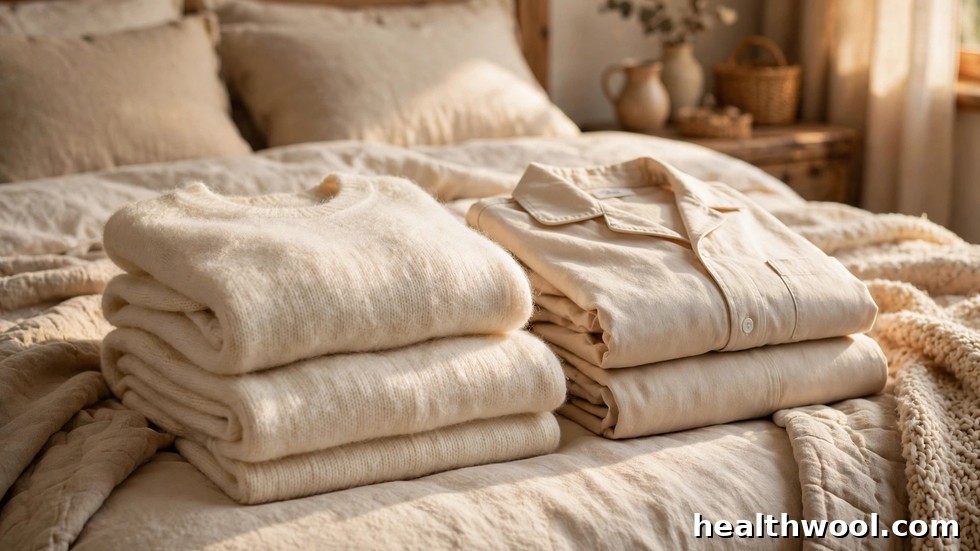
Most sleep advice focuses on the bedroom and the bed. The pyjamas you wear get far less attention, which is odd, because they are the layer closest to your skin for eight hours a night. If your sleepwear traps sweat, clings when damp, or leaves you shivering when you throw off the covers, it can quietly disturb your night — including the dreaming, rapid-eye-movement (REM) stage that many people are curious about.
Merino wool sleepwear has gained a loyal following among warm sleepers, athletes, and people who travel, while cotton remains the familiar, affordable default. Both have genuine strengths. The question in this article’s title deserves a careful answer, though: no fabric has been shown to directly improve REM sleep in a reliable, general way. What fabrics can do is affect comfort, temperature, and moisture — and comfort affects how settled your sleep is overall. Understanding that distinction helps you choose wisely without falling for exaggerated claims.
What REM Sleep Is — and What It Is Not
Sleep cycles through stages, including lighter sleep, deep sleep, and REM sleep, when dreaming is most vivid and the brain is highly active. REM periods tend to get longer in the second half of the night. Healthy sleep involves cycling through these stages several times, and waking briefly between cycles is normal. People often focus on REM because it feels special — it is linked with dreaming, memory processing, and feeling mentally refreshed — but deep sleep is equally important for physical restoration, and no single stage is the whole story.
Many factors influence how much REM sleep you get and how settled it feels, including your sleep schedule, stress, alcohol, caffeine, medications, and overall sleep duration. If you consistently sleep too few hours, you will naturally get less REM, because REM concentrates later in the night. A fabric cannot compensate for a short or irregular sleep schedule, and any sleepwear brand claiming to boost REM directly should be viewed with healthy scepticism. What sleepwear can plausibly do is reduce the small disturbances — overheating, dampness, chills — that fragment sleep.
How Merino Wool Behaves Next to Skin
Merino wool comes from Merino sheep and is prized for its fine, soft fibres. Unlike coarse wool, good merino feels smooth against the skin and does not itch for most people. Its standout property is moisture management. Merino fibres absorb water vapour and can hold a significant amount of moisture before feeling wet, then release it gradually. That buffering helps keep the skin’s microclimate steadier as your body temperature shifts through the night.
Merino also insulates when damp, which is unusual. A cotton T-shirt that becomes sweaty tends to feel cold and clammy, especially if you throw off the covers. Merino, by contrast, continues to provide some warmth even when it has absorbed moisture, and it tends to dry without that cold, clingy feeling. For people who perspire at night, that difference can mean fewer full wake-ups to change clothes or adjust bedding.
Temperature regulation is merino’s other strength. The same fine fibres that insulate in winter also breathe in warmer conditions, because air can move through the knitted fabric. That is why merino is used for both winter base layers and lightweight summer tops. In sleepwear, a lightweight merino top and bottom set can work across a surprisingly wide range of bedroom temperatures, with layering doing the rest.
Where Cotton Still Shines
Cotton’s popularity is not an accident. It is soft, breathable, widely available, affordable, and easy to wash. A lightweight cotton pyjama set feels cool and crisp on a warm night, and many people simply prefer its familiar feel. For dry sleepers in a cool or moderate bedroom, cotton is often perfectly comfortable, and there is no reason to replace something that already works.
Cotton’s weakness is moisture. Cotton fibres absorb water readily but release it slowly, and wet cotton loses much of its insulating ability. If you perspire, live in a humid climate, or tend to wake damp, cotton sleepwear can become heavy, clingy, and cold — the classic damp-T-shirt-at-3-a.m. problem. Cotton also wrinkles and can feel rough after many washes if the fabric quality is low, though good-quality cotton, such as long-staple or brushed cotton, holds up better.
Care is another point in cotton’s favour. Most cotton sleepwear can be machine washed and dried without special treatment, while merino needs gentler care: a cool wool cycle, mild detergent, and flat drying or low-heat tumble drying, depending on the garment. If you dislike hand-washing or careful laundry, that practical difference matters, because sleepwear you dread washing will not stay fresh for long.
What Small Studies Have Found
A handful of small studies have compared wool and cotton sleepwear, including work with older adults and people sleeping in cool or warm conditions. Some found that participants in wool sleepwear fell asleep slightly faster or reported better sleep quality, particularly in cooler environments or among people who tend to feel cold. Others found little difference, or benefits that depended on room temperature and the individual’s own thermal preferences.
These findings are interesting, but they are far from conclusive. Studies have been small, short, and varied in design, and none establishes that merino directly increases REM sleep. The most reasonable interpretation is that merino’s temperature and moisture properties may reduce discomfort-related awakenings for some sleepers, especially those who run warm or cold at night. If you already sleep well in cotton, switching fabrics is unlikely to transform your nights. If you regularly wake damp or chilled, it is a change worth trying.
Choosing Between Them: A Practical Checklist
Start with your own nights. Do you wake sweaty, or do you wake cold? Do you kick off the covers, or pull them tighter? Warm, damp sleepers are the most likely to notice a difference with merino. Dry, comfortable cotton sleepers may notice little change. Next, consider your bedroom temperature and season. Merino earns its keep most clearly in cool bedrooms and in shoulder seasons, when temperatures swing during the night. In a hot summer bedroom, a very lightweight merino or a loose cotton set may both work, and airflow matters more than fibre alone.
Fit matters, too. Sleepwear should be loose enough to allow air circulation and movement, without excess fabric bunching under you. Long sleeves and trousers provide more even coverage if you tend to get cold arms or legs, while short sets suit warm sleepers. Seams, waistbands, and tags can disturb sleep more than fibre choice, so comfort details deserve attention. Finally, think about laundry: if you will realistically wash merino gently and regularly, it will last and perform well. If not, a high-quality cotton set you actually wash is the better practical choice.
Building a Sleepwear System That Works
You do not have to commit to one fabric for everything. Many sleepers mix and match: merino in winter, cotton in summer, or a merino top with cotton bottoms. Layering works for sleepwear just as it does for bedding. A light merino base layer under a cotton pyjama top gives you moisture management next to the skin with a familiar outer feel. Socks are another small but useful addition — warm feet help the body release heat from the core, which is associated with falling asleep more easily for many people.
Pay attention to the whole sleep system, not just the pyjamas. A breathable mattress, a duvet with an appropriate tog rating, and a cool bedroom all interact with sleepwear. Changing only your pyjamas while sleeping under a heavy synthetic duvet in a hot room may not show much benefit, because the bedding is still trapping heat. Adjust the biggest factor first — usually room temperature and duvet — then fine-tune sleepwear.
If sleep difficulties persist, or if you experience frequent night sweats, breathing problems at night, or daytime sleepiness that affects your life, talk with a qualified healthcare professional. Sleepwear is a comfort choice, not a health intervention, and persistent problems deserve proper assessment rather than a shopping solution.
Key Takeaways
- No fabric has been reliably shown to directly improve REM sleep; comfort and temperature are the real mechanisms.
- Merino wool manages moisture and insulates when damp, making it helpful for warm or perspiring sleepers.
- Cotton is soft, breathable, affordable, and easy to care for, but it feels cold and clammy when wet.
- Small studies suggest wool may help some sleepers settle faster, especially in cool conditions, but evidence is limited.
- Choose by your own nights: damp or chilled sleepers gain most from merino; dry, comfortable cotton sleepers may not need to switch.
- Fit, layering, and the wider sleep system matter as much as fibre choice.
So, which improves REM sleep? Honestly, neither — directly. But if merino helps you stay dry, warm, and undisturbed through the night, your sleep as a whole may feel more settled, and that is a worthwhile gain on its own. Try a lightweight merino set for a few weeks, keep your bedroom cool, and notice whether your mornings feel any different. Comfort is not a small thing when it comes to sleep; it is, very often, the whole thing.
Try a free calculator
Match this guide with a number: Tog Calculator · Weighted Blanket Calculator · Sleep Cycle Calculator



Disclaimer: Content on HealthWool.com is for informational, lifestyle, and thermal wellness purposes only. It is not a substitute for professional medical advice, diagnosis, or treatment.