Softness is the first thing you notice when you pick up a luxury knit, and the last thing you can judge from a product photo. Cashmere, alpaca, and merino wool all claim to be the softest, yet they feel distinctly different in the hand and against the skin. This guide breaks down how softness is actually measured, how the three fibres compare on fibre diameter, hand feel, warmth, durability, and care, and which one suits different budgets, climates, and sensitivities. No single fibre wins on every measure — the best choice depends on what soft means to you.
How Softness Is Measured
Softness in wool science starts with fibre diameter, measured in microns — thousandths of a millimetre. A human hair is roughly 70 microns wide. The finer the fibre, the more easily it bends against the skin instead of prickling it, and the softer it feels. Fibres above about 30 microns tend to trigger itch receptors in most people. Fibres below 20 microns generally feel soft, and fibres below 16 microns feel exceptionally soft. This threshold is why fibre diameter is the closest thing the textile world has to an objective softness rating.
But diameter is not the whole story. Fibre length, crimp, surface scale structure, yarn twist, knit gauge, and finishing all influence hand feel. A loosely knitted, lightly finished fabric feels softer than a tightly twisted, heavily treated one made from the same fibre. Pilling, the formation of small balls on the surface, can also make a garment feel rougher over time. Laboratory tests can measure softness-related properties such as bending stiffness and surface friction, but the final judge is always your own skin. Two sweaters with identical fibre diameters can feel different because of how they were made.
Cashmere: The Classic Luxury Standard
Cashmere comes from the soft undercoat of cashmere goats, combed out each spring. Top-grade cashmere fibres measure around 14 to 16 microns, with lengths of 34 to 36 millimetres or more considered ideal. That combination of fineness and length gives cashmere its famous buttery, cloud-like feel. It is also remarkably warm for its weight — often described as several times warmer than sheep’s wool at the same weight — because its fine fibres trap air efficiently while remaining light.
Cashmere’s softness comes with trade-offs. It is the most expensive of the three fibres, largely because each goat yields only a small amount of undercoat each year. It is also the most delicate: cashmere pills more readily than merino, wears thinner in high-friction areas, and needs gentle care. Lower grades of cashmere, made from shorter or coarser fibres, feel less soft and pill more, yet may still carry a premium price. When shopping, look for longer fibre length claims, a dense but soft knit, and a reputable seller, and be wary of suspiciously cheap cashmere, which may be blended or low-grade.
Alpaca: The Silky, Hypoallergenic Contender
Alpaca fibre comes from alpacas raised mainly in the Andes. Its diameter varies by type: huacaya alpaca, the fluffy, crimped type, typically measures 18 to 25 microns, while suri alpaca, the silky, draping type, can be finer. Good alpaca feels silky and smooth rather than fluffy, with a distinctive drape that falls beautifully in scarves, wraps, and sweaters. Many people describe alpaca as softer than sheep’s wool but less cloud-like than cashmere — a sleek softness rather than a pillowy one.
Alpaca has two practical advantages. It contains virtually no lanolin, which makes it a popular choice for people who react to lanolin or prefer lanolin-free fibres. It is also very warm and lightweight, with hollow fibre cores that trap air efficiently. Alpaca is generally more durable than cashmere and pills less, though it can still pill in high-friction areas. Its main drawback is elasticity: alpaca stretches more readily than wool, so alpaca garments can lose shape over time, especially in loosely knitted styles. Blending alpaca with a small amount of wool or nylon can improve shape retention.
Merino Wool: The Versatile Everyday Soft
Merino wool comes from merino sheep, and its softness depends heavily on grade. Standard merino ranges from about 19 to 22 microns, superfine merino from about 17 to 19 microns, and ultrafine merino below 17 microns. Top-grade ultrafine merino rivals cashmere in softness while costing considerably less and offering better durability and elasticity. That versatility is merino’s greatest strength: it can be a rugged outdoor base layer, a fine suit fabric, or a soft everyday sweater, depending on grade and construction.
Merino also wins on practicality. It stretches and recovers its shape better than alpaca or cashmere, resists wrinkles, manages moisture exceptionally well, and is easier to care for than cashmere. Most merino garments are machine washable on a gentle cycle, while cashmere often prefers hand washing. Merino’s warmth is excellent, though at the same weight it is generally less warm than cashmere or alpaca. For everyday wear, that trade-off is often worth it: merino gives you softness you can actually live in, wash, and wear hard.
Head-to-Head Softness Comparison
Against Bare Skin
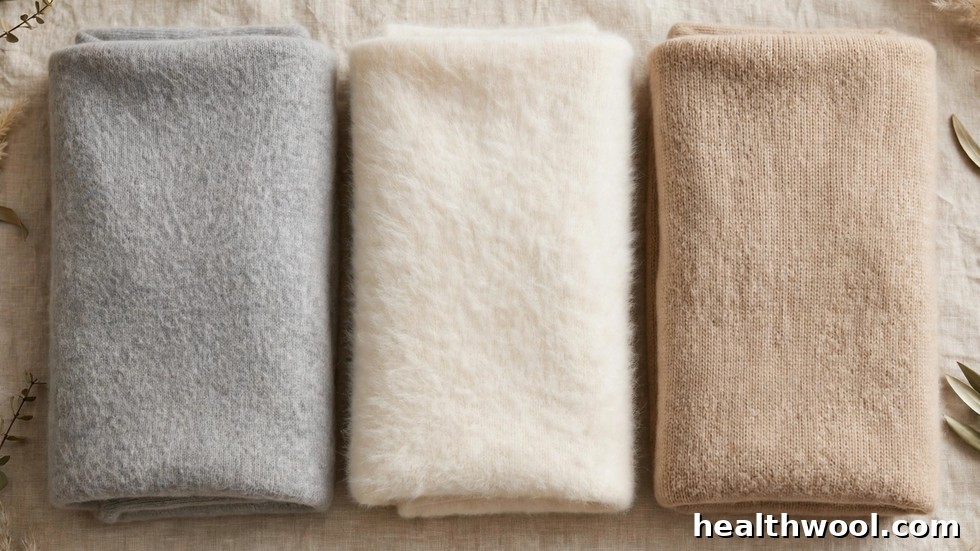
On bare skin, top-grade cashmere usually feels softest, with its ultra-fine, long fibres creating a smooth, almost weightless touch. Ultrafine merino comes very close, and many people cannot reliably tell the two apart in a blind touch test. Alpaca feels different rather than worse: silkier and smoother, with a cool, flowing hand that suits draped garments. Standard merino, at 20 microns and above, feels soft but noticeably less luxurious than the other two at their best.
Warmth, Weight, and Drape
For warmth at the lightest weight, cashmere and alpaca lead, with alpaca often feeling slightly heavier and more substantial. Merino offers the best warmth-to-durability balance for active use. In drape, alpaca wins for flowing scarves and wraps, cashmere drapes softly but lightly, and merino holds structure best, making it ideal for fitted sweaters and tailored layers. Consider the garment’s purpose, not just its fibre, when weighing these differences.
Durability and Care
Merino is the most durable and easiest to care for of the three, followed by alpaca, with cashmere the most delicate. Pilling follows a similar order: cashmere pills most, alpaca moderately, and merino least at comparable grades. All three benefit from gentle washing, air-drying, and careful storage away from moths. If you want a soft sweater you can wear weekly without babying it, merino is the pragmatic winner. If you want a special-occasion wrap to treasure, cashmere or alpaca may be worth the extra care.
Which Fibre for Sensitive Skin?
For sensitive skin, fibre diameter matters most, followed by lanolin content and finishes. Ultrafine merino and high-grade cashmere are both excellent starting points because their fibres are too fine to prickle. Alpaca’s lanolin-free nature makes it appealing for people with lanolin sensitivity, though its slightly coarser average diameter means quality varies more. In all cases, try a garment against your inner forearm or neck for a few minutes before committing, and wear new knits over a smooth base layer if direct contact feels uncertain. Persistent skin reactions deserve professional advice rather than continued trial and error.
Budget also shapes the decision honestly. A high-quality merino sweater often delivers 90 percent of cashmere’s softness at a fraction of the price, and it will likely last longer with everyday wear. Cashmere justifies its price for those who value its specific cloud-like feel and lightest warmth. Alpaca occupies a lovely middle ground: distinctive silkiness, excellent warmth, lanolin-free comfort, and a price between merino and cashmere. There is no wrong answer, only the answer that fits your skin, your climate, and your life.
Key Takeaways
- Softness tracks fibre diameter: below 20 microns feels soft, below 16 microns feels exceptionally soft.
- Cashmere is the softest and warmest at the lightest weight, but also the most expensive and delicate.
- Alpaca offers silky softness, excellent warmth, and virtually no lanolin, with more stretch than wool.
- Ultrafine merino rivals cashmere in softness while offering better durability, elasticity, and easy care.
- Try fibres against your skin, check fibre grade and knit quality, and choose by garment purpose as well as feel.
Cashmere, alpaca, and merino each define softness in their own way: cashmere as a cloud, alpaca as silk, merino as a faithful everyday comfort. Understanding fibre diameter, warmth, durability, and care lets you choose with confidence instead of guessing from a label or a price tag. Whichever you pick, the best test remains the simplest one — hold it, wear it, and see how it feels against your own skin on a cold evening. That is a rating no laboratory can replace.
Try a free calculator
Match this guide with a number: Tog Calculator · Weighted Blanket Calculator · Sleep Cycle Calculator



Disclaimer: Content on HealthWool.com is for informational, lifestyle, and thermal wellness purposes only. It is not a substitute for professional medical advice, diagnosis, or treatment.