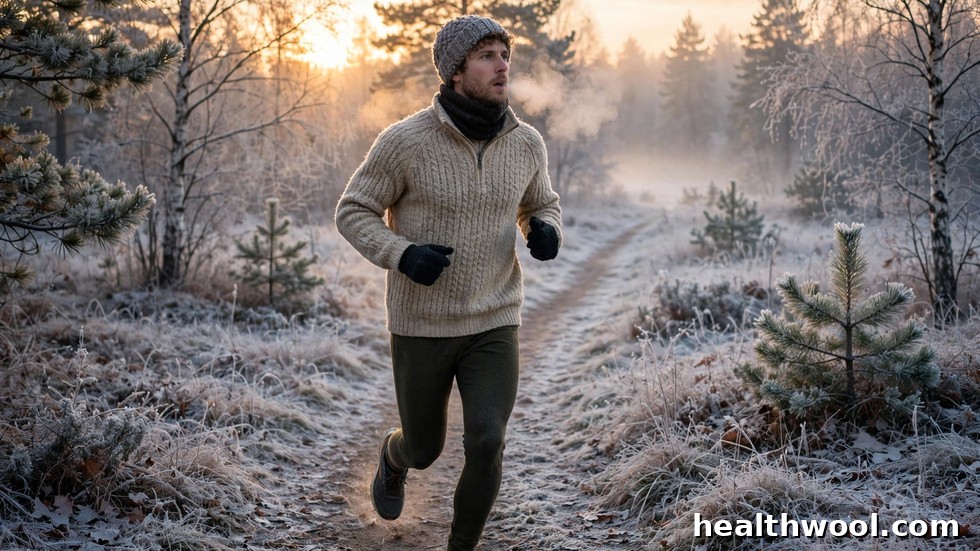
Anyone who exercises outdoors knows the moment when a shirt stops feeling like clothing and starts feeling like a wet towel. That clammy, heavy, chilled feeling is a moisture problem, and it is exactly where wool earns its reputation. Wool activewear has moved from niche hiking shops into mainstream running, cycling, and gym wardrobes, largely because of how it handles sweat. This article explains what moisture wicking really means, how wool’s fibre structure makes it different from cotton and synthetics, and what that means for comfort and skin during and after activity.
What Moisture Wicking Actually Means
Moisture wicking is often described as pulling sweat away from the skin, but the physics is a little more interesting. When you exercise, your body produces sweat to cool itself. That sweat can either evaporate from your skin, be absorbed into your clothing, or pool on the surface. A good activewear fabric manages this process so your skin stays drier and your temperature stays steadier. True wicking involves moving liquid moisture along fibres and through the fabric structure, while moisture vapour transmission moves sweat in vapour form before it condenses.
The distinction matters because fabrics can be good at one and poor at the other. A fabric that absorbs a lot of liquid but dries slowly will feel heavy and cold once you stop moving. A fabric that moves vapour well but absorbs little may feel dry during light activity but overwhelmed during hard effort. Wool is unusual in doing both reasonably well: its fibres absorb moisture vapour inside the fibre itself, while the fabric structure allows liquid and vapour to move outward. That dual action is the core of wool’s activewear appeal.
The Fibre Science, in Plain Language
A wool fibre is built like a tiny, layered sponge. Its outer cuticle is scaly and water-repellent, while its inner cortex can absorb a large amount of moisture — up to around a third of the fibre’s dry weight — without feeling wet. When moisture enters the cortex, the fibre swells slightly and releases a small amount of heat, a process sometimes called the heat of sorption. This is part of why wool feels warm when you first put it on in cold weather, and why it continues to feel comfortable as you start to sweat.
Merino wool is especially prized for activewear because its fibres are fine, typically under 20 microns, and highly crimped. That crimp creates tiny air pockets in yarn and fabric, which insulate and allow air to circulate. Fine fibres also bend against the skin rather than prickling it, which matters when a garment is worn tight during movement. Coarser wool can feel scratchy and is rarely used for next-to-skin activewear, so fibre diameter is one of the first things to check when shopping for wool sportswear.
Wool vs Cotton vs Synthetics for Sweat
Cotton: Comfortable Until It Isn’t
Cotton absorbs moisture readily and feels soft and cool at first, which is why cotton T-shirts are so popular for casual wear. During exercise, however, cotton’s absorbency becomes a drawback. It soaks up sweat, becomes heavy, dries slowly, and then chills the wearer when activity stops. For low-intensity activity in mild weather, cotton is fine. For sustained sweating, especially outdoors, it is the weakest of the three options.
Synthetics: Fast Drying, With Trade-Offs
Polyester and nylon activewear are engineered to move moisture quickly and dry fast. They are lightweight, durable, and often cheaper than merino. Their weakness is that they absorb very little moisture themselves, so sweat tends to sit on the skin or in the fabric’s surface channels. Once saturated, synthetics can feel clammy, and they are notorious for holding onto odour after repeated wears, even after washing. Many runners love synthetics for short, hot efforts and switch to wool for longer or cooler sessions.
Merino Wool: The Steady Performer
Merino sits between the two. It absorbs moisture into the fibre, keeping the skin surface drier than synthetics during moderate effort, and it dries faster than cotton once activity stops. It also regulates temperature across a wider range: warm when you are still, breathable when you heat up. That versatility is why merino base layers are standard for hiking, skiing, and multi-day adventures, where you cannot change clothes every time conditions shift. The trade-offs are price and durability — merino garments cost more and need gentler care than polyester.
What This Means for Skin Comfort
Skin health during exercise is mostly about reducing prolonged dampness, friction, and irritation. Skin that stays wet for hours softens, becomes more vulnerable to rubbing, and is more likely to chafe or develop rashes. By keeping the skin surface drier and buffering temperature swings, wool activewear can reduce the clammy, rubbed-raw feeling that damp cotton or saturated synthetics sometimes cause. This is general comfort information, not a claim that wool prevents or treats skin conditions. Anyone with persistent skin problems should discuss them with a qualified professional.
Fit and construction matter as much as fibre. Flatlock seams reduce rubbing, a close but not constricting fit keeps fabric in contact with the skin so it can manage moisture, and zoned ventilation panels in some garments add airflow where sweat collects most. Changing out of damp workout clothes promptly after exercise, showering, and drying skin thoroughly are simple habits that support skin comfort regardless of fabric. Wool helps during activity; post-exercise care finishes the job.
Choosing Wool Activewear That Works
Start with weight. Lightweight merino, around 150 grams per square metre, suits warm weather and high-intensity activity. Midweight merino, around 200 to 250 grams, suits cooler weather and general outdoor use. Look for blends if durability is a concern: merino blended with a small percentage of nylon or elastane can improve stretch and lifespan while retaining much of wool’s moisture behaviour. Pure merino offers the best moisture and odour performance but may wear faster in high-friction areas.
Check the garment’s construction as well as its label. A merino blend that is mostly polyester will behave mostly like polyester, so the percentage matters. Look for fine, smooth knits for next-to-skin layers, and avoid heavy, hairy textures that trap heat. For socks, merino blends with cushioning in the heel and toe combine moisture management with protection against blisters. For base layers, a quarter-zip neck lets you vent heat quickly without removing the layer entirely.
Caring for Wool Activewear
Wool activewear rewards gentle care. Most merino garments are machine washable on a cold, gentle cycle, but always check the label. Use a wool-friendly detergent, avoid fabric softener, and skip high dryer heat, which can shrink wool. Air-drying preserves shape and fibre life. One of wool’s practical advantages is that it needs washing less often than synthetics: its fibres resist odour build-up, so a merino top can often be aired and worn again before washing. That saves water, energy, and the garment itself.
Watch for pilling in high-friction areas, such as under backpack straps, and use a fabric comb or shaver to remove pills gently. Store wool clean and dry, and protect it from moths during long storage with cedar or lavender, or in sealed containers. With reasonable care, a good merino base layer can last for years of regular use, which softens the higher upfront cost considerably.
Key Takeaways
- Wool absorbs moisture inside the fibre while moving vapour outward, keeping skin drier than cotton during sustained activity.
- Merino’s fine, crimped fibres provide temperature regulation across a wider range than cotton or polyester alone.
- Cotton saturates and chills; synthetics dry fast but can feel clammy and hold odour; merino offers a steadier middle path.
- Fit, seams, and garment weight matter as much as fibre — choose lightweight merino for heat and midweight for cold.
- Change out of damp clothes promptly, wash gently, and air merino between wears to keep skin comfortable and garments lasting.
Wool’s moisture wicking is not magic, but it is well-grounded fibre science with real everyday benefits. For anyone who exercises outdoors, hikes, skis, or simply dislikes the damp chill of a cotton shirt after a workout, merino activewear offers a noticeably steadier, drier, more comfortable experience. It costs more and asks for gentler care, but for many active people, the comfort is worth it — mile after mile, wash after wash.
Try a free calculator
Match this guide with a number: Tog Calculator · Weighted Blanket Calculator · Sleep Cycle Calculator


Disclaimer: Content on HealthWool.com is for informational, lifestyle, and thermal wellness purposes only. It is not a substitute for professional medical advice, diagnosis, or treatment.