A new sweater, a pair of leggings, a freshly dyed pair of jeans — most of us put them on without a second thought. But for some people, a new garment brings an itchy, red, uncomfortable rash within hours or days. One common explanation is contact dermatitis linked to clothing: skin reacting to something it has touched, such as a dye, a finishing chemical, or a fibre itself. This article explains what that means in plain language, which fabrics and dyes are most often involved, how to spot patterns in your own wardrobe, and what gentler clothing choices look like. It is general information only, not personal medical advice, and persistent or spreading skin reactions deserve a conversation with a qualified professional.
What Is Contact Dermatitis, in Plain Terms?
Contact dermatitis is a broad term for skin irritation or inflammation that appears where skin has been in contact with something. There are two main types. Irritant contact dermatitis happens when a substance directly irritates the skin, especially with repeated or prolonged contact, friction, sweat, or heat. Allergic contact dermatitis happens when the immune system reacts to a specific substance after previous exposure. Both can look similar — redness, itching, dryness, small bumps, or flaking — and telling them apart usually requires professional assessment rather than guesswork at home.
Clothing-related reactions often show up where fabric sits tightest against the skin or where sweat collects: around the waistband, under the arms, at the neckline, behind the knees, or where elastic presses. They may appear after wearing a garment once or after many wears, because allergic reactions can develop over time with repeated exposure. That delayed timing is part of what makes clothing reactions confusing. A favourite shirt worn happily for months can suddenly seem to be the culprit, when in fact sensitivity has built gradually.
Which Dyes Are Most Often Involved?
Textile dyes give clothing its colour, but some dye chemicals are known skin sensitisers. Disperse dyes, used to colour synthetic fibres such as polyester, are among the most frequently reported in clothing-related skin reactions. Dark colours, especially deep blues and blacks, and bright, intense shades often require larger amounts of dye, which may increase the chance of leftover dye chemicals remaining in the fabric. That does not mean every dark garment is a problem — most people wear them without issue — but it helps explain why reactions are sometimes linked to a particular vivid or dark item.
Other culprits can hide in the finishing process. Formaldehyde-based resins have historically been used to make fabrics wrinkle-resistant or easy-care, and they can irritate sensitive skin. Some people also react to chemicals used in printing, waterproofing, or softening treatments. Because labels rarely list every processing chemical, it can be hard to pinpoint a single ingredient from a garment tag alone. That is why dermatologists sometimes use patch testing, a controlled process that places small amounts of common allergens on the skin to see which ones provoke a reaction, to narrow things down.
Why Synthetic Fabrics Can Be Harder on Skin
Synthetic fibres such as polyester, nylon, and acrylic are made from petrochemicals and are often dyed with disperse dyes. On their own, the fibres are not inherently harmful, and millions of people wear them comfortably every day. The challenge is how they behave on the skin. Many synthetics breathe less well than natural fibres, trapping heat and sweat against the body. Warmth and moisture can soften the skin barrier and increase the transfer of dye or finishing chemicals from fabric to skin, especially during exercise or on hot days.
Friction adds another layer. Tight synthetic garments can rub during movement, and that rubbing can irritate skin that is already warm and damp. Seams, labels, and elastic bands concentrate pressure in small areas, which is why rashes often trace the outline of a waistband or a bra strap. Blended fabrics sit somewhere in between: a cotton-polyester blend may breathe better than pure polyester, but it can still carry the same dyes and finishes. Fibre content alone never tells the whole story; weave, fit, dye, and finish all matter.
Natural Fibres: A Gentler Starting Point
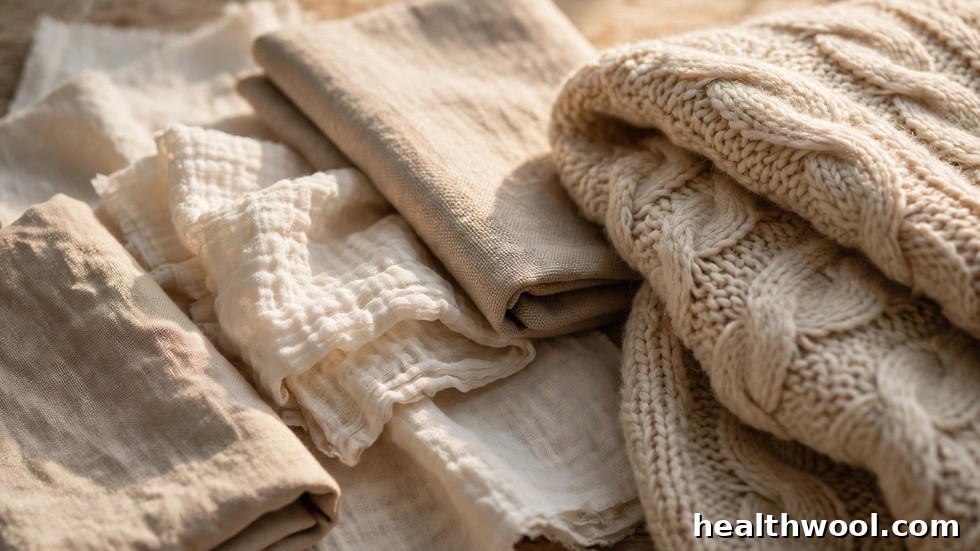
Natural fibres such as wool, cotton, and linen are often easier on sensitive skin, but for different reasons. Cotton is soft, breathable, and widely tolerated, especially when undyed or dyed with gentler processes. Linen is airy and dries quickly, which helps keep skin cooler. Wool, particularly fine merino, manages moisture exceptionally well and can reduce the clammy feeling that makes other fabrics uncomfortable. None of these fibres is a guaranteed safe choice for everyone, and wool deserves a note of its own: a small number of people react to lanolin or find coarse wool scratchy, so fine, soft wool worn over a smooth base layer is a sensible way to test it.
What often matters most is not just the fibre but how little has been done to it. Undyed or naturally coloured fabrics, garments certified to limit harmful substances, and items washed before first wear tend to be gentler choices. Certifications such as OEKO-TEX Standard 100 test finished textiles for a list of harmful substances, and they can be a useful shortcut when shopping, though no certification covers every possible sensitivity. Reading labels for fibre content, country of origin, and care instructions is a good habit, even if labels cannot reveal every chemical used.
Spotting Patterns in Your Own Wardrobe
If you suspect clothing is irritating your skin, a little detective work helps. Note when reactions appear, which garments you wore, whether the item was new or freshly washed, and where on the body the irritation sits. Photographs taken over a few days can help you — or a professional — see patterns you might miss in the moment. Try wearing the suspected garment over a clean cotton layer for a short period rather than against bare skin, and see whether the pattern changes. Avoid testing by deliberately wearing something that has already caused a strong reaction.
Keep a simple log for a couple of weeks: garment, fibre, colour, whether it was new, and how your skin felt afterwards. You may notice that reactions cluster around dark synthetics, new unwashed items, or tight elasticated clothing. Or you may find no clear pattern at all, which is also useful information. Skin has many triggers — soaps, laundry products, heat, stress, and other exposures all play a role — so clothing is only one piece of a larger puzzle. A log gives a professional something concrete to work with instead of a vague memory.
Practical Steps for Happier Skin in Clothes
Wash Before You Wear
Washing new clothes before wearing them is one of the simplest, most effective habits for sensitive skin. A gentle wash removes some surface dye, dust, and finishing residues, and it softens stiff new fabric. Use a fragrance-free detergent if scented products bother you, skip fabric softener, and rinse well. For dark garments, washing separately the first few times also protects your other laundry from dye transfer.
Choose Fit and Fabric Thoughtfully
Looser fits reduce friction and let air circulate, which helps skin stay drier. Smooth, flat seams and soft waistbands are kinder than scratchy elastic or rough stitching. When you need performance clothing for sport, look for moisture-wicking natural blends or well-ventilated designs rather than the tightest synthetic option, and change out of damp workout clothes promptly after exercise. At night, breathable sleepwear in cotton, linen, or fine wool can make a real difference to comfort.
Rethink Laundry Products
Sometimes the irritant is not the garment at all but what it was washed in. Strongly scented detergents, dryer sheets, and fabric softeners leave residues on every fibre. If you are investigating skin reactions, switching to a simple, fragrance-free detergent for all laundry — not just the suspected garment — removes one variable. Rinse cycles matter too: an extra rinse costs little and leaves less residue behind.
When to Seek Professional Help
Most mild clothing irritation settles once the garment is removed and the skin is given time to calm. But there are clear reasons to seek professional advice: a rash that spreads, blisters, weeps, or becomes painful; irritation that keeps returning despite changing clothes and laundry products; swelling, especially around the face; or any reaction that interferes with sleep or daily life. A dermatologist can assess the skin, discuss patch testing where appropriate, and help distinguish a clothing reaction from other skin conditions that can look similar.
It is also worth mentioning any new medications, skincare products, or workplace exposures when you seek advice, because skin reactions rarely have a single obvious cause. Bring your clothing log, the garment labels if you still have them, and a list of laundry products you use. The more specific you can be, the faster a professional can help you narrow down the trigger instead of working through trial and error alone.
Key Takeaways
- Contact dermatitis from clothing can involve dyes, finishing chemicals, friction, heat, and trapped sweat — not just the fibre itself.
- Disperse dyes in synthetics and dark, intensely coloured garments are reported more often, but most people wear them without problems.
- Wash new clothes before wearing, choose breathable natural fibres and looser fits, and use fragrance-free laundry products.
- Keep a simple log of garments, colours, and reactions to spot patterns and help a professional assess the cause.
- Seek qualified advice for spreading, blistering, painful, or persistent rashes rather than trying to diagnose the cause alone.
Clothing should comfort, not irritate, and for most people a few thoughtful choices make that the norm. Washing before wearing, favouring breathable natural fibres, easing up on tight fits and heavy finishes, and paying attention to patterns all reduce the odds of a reaction — and give you useful information if one still appears. Your skin is a good messenger. Listening to it, without panicking about it, is the gentlest way to build a wardrobe that feels as good as it looks.
Try a free calculator
Match this guide with a number: Tog Calculator · Weighted Blanket Calculator · Sleep Cycle Calculator



Disclaimer: Content on HealthWool.com is for informational, lifestyle, and thermal wellness purposes only. It is not a substitute for professional medical advice, diagnosis, or treatment.