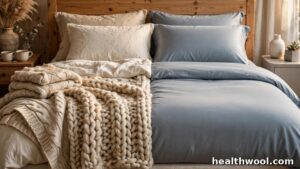

Breathability is one of those words that appears on almost every bedding and clothing label, yet it rarely comes with a number you can compare. What does it actually mean for a fabric to breathe, and how do cotton, linen, and merino wool really stack up? The short answer is that all three breathe well, but they do it in different ways, and the best choice depends on your climate, your sleep temperature, and whether you run hot or cold. This guide explains how breathability is measured, what the ratings mean in everyday life, and how to pick the right fibre for each season.
What Breathability Really Means
When people say a fabric breathes, they usually mean two related things. The first is air permeability: how easily air passes through the fabric. A loosely woven linen shirt lets a breeze through in a way a tightly woven cotton sheet does not. The second is moisture vapour transmission: how easily water vapour from sweat or breath passes through the fabric instead of condensing on the skin. A fabric can be airy but poor at moving moisture, or dense but excellent at absorbing it. True comfort depends on both.
Testing labs measure these properties with standardised methods. Air permeability is often reported in litres per square metre per second or cubic feet per minute, measured by forcing air through a fabric sample at a set pressure. Moisture vapour transmission rate, often shortened to MVTR, measures how much water vapour passes through a sample over 24 hours. These numbers are useful for comparing fabrics in a lab, but they do not tell the whole story. Weave, fabric weight, finishes, and even the colour of a dye can shift results, and a lab sample does not sweat, move, or sleep under a duvet.
Cotton: The Familiar All-Rounder
Cotton is the fabric most of us know best, and for good reason. It is soft, affordable, widely available, and comfortable against the skin. Cotton fibres absorb moisture well — a cotton shirt can soak up a noticeable amount of sweat — which feels cool at first. That absorbency is also its weakness. Once cotton is saturated, it dries slowly, and wet cotton against the skin can feel clammy and cold, especially in cool weather or after exercise. Anyone who has hiked in a cotton T-shirt and then stopped in the shade knows this feeling.
In breathability tests, cotton performs respectably but not exceptionally. A lightweight cotton voile or percale weave is far more breathable than a dense cotton sateen, which shows how much construction matters. Percale, with its crisp plain weave, is a popular choice for summer sheets precisely because it feels light and airy. Sateen feels smoother and slightly heavier, and it traps a little more warmth. If you love cotton and sleep warm, choose lighter weights, plain weaves, and looser fits, and expect cotton to shine in mild, dry conditions rather than in humid heat or cold, damp weather.
Linen: The Summer Champion
Linen, made from flax fibres, is often the most breathable of the three in pure air-permeability terms. Flax fibres are longer and stiffer than cotton, and linen fabrics are typically woven more loosely, leaving tiny gaps that let air flow freely. Linen also absorbs moisture quickly and releases it quickly, drying faster than cotton. That combination — high airflow plus fast drying — is why linen shirts, bedding, and curtains have been summer staples in warm climates for centuries.
Linen has quirks worth knowing. It wrinkles famously, which bothers some people and charms others. It can feel crisp or even slightly rough when new, softening beautifully with washing and wear. Pure linen is also less elastic than cotton or wool, so it drapes rather than stretches. For bedding, linen’s breathability makes it a wonderful hot-weather choice, but in cold bedrooms it can feel cool at first touch, and it does not insulate as well as wool when temperatures drop. Linen is at its best when the goal is staying cool and dry.
Merino Wool: The Surprising Breathability Star
Wool surprises many people in a breathability comparison, because we associate it with warmth. But merino wool — the fine, soft wool from merino sheep — is one of the most sophisticated moisture managers in the textile world. A merino fibre can absorb up to about a third of its weight in moisture before feeling damp, and it releases that moisture gradually. As moisture is absorbed, a small amount of heat is released, which helps explain why wool feels warm in winter without feeling sweaty. In warm conditions, the same fibre moves vapour away from the skin and lets air circulate through its crimped structure.
This two-way behaviour is why merino is prized for base layers, hiking socks, and year-round bedding. Lab tests often show merino’s moisture vapour transmission rivalling or beating cotton, even though its air permeability may be lower than linen’s in a simple airflow test. In real life, that trade-off often favours wool: it keeps the microclimate next to your skin steadier across changing temperatures. A merino base layer worn on a cool morning hike, then under a jacket at midday, tends to feel comfortable for longer than cotton, which swings from damp to cold as conditions change.
Head-to-Head: How They Compare in Real Life
Hot, Humid Weather
In hot, humid weather, linen usually wins for pure coolness, with lightweight cotton close behind. Linen’s airflow and fast drying keep skin feeling fresh, while merino can feel warmer than expected if the garment is too heavy. The exception is humid heat during activity, where merino’s moisture management can outperform cotton, which saturates and clings. For summer bedding in a humid climate, linen sheets with a light cotton or linen duvet cover are hard to beat.
Cool and Variable Weather
When temperatures swing through the day, merino pulls ahead. It insulates when you are still, breathes when you warm up, and avoids the damp chill that cotton can bring. This is why merino base layers are standard kit for walkers, runners, and skiers. Cotton can work in cool weather if you stay dry and keep moving, but it is a riskier choice once sweat or rain enters the picture. Linen, while breathable, offers little insulation and is best layered over or under something warmer.
Sleep and Nighttime Comfort
Nighttime breathability is about steady moisture management over many hours. Here merino wool bedding — a wool duvet in a suitable weight, or a wool-filled pillow — often earns its fans. It buffers the humidity that builds up under bedding and avoids the clammy wake-ups that cotton bedding can bring in warm rooms. Linen sheets are a superb summer pairing with a light wool duvet, combining linen’s airflow on the surface with wool’s moisture buffering underneath. Cotton sheets remain a comfortable, affordable middle ground, especially in percale weaves.
Why Weave and Weight Matter as Much as Fibre
It is tempting to rank fibres and stop there, but weave and weight can overturn the ranking. A heavy, tightly woven linen can breathe worse than a light, open cotton voile. A dense merino knit traps more heat than a fine merino jersey. Finishes matter too: waterproof coatings, heavy softeners, and wrinkle-resistant treatments can all reduce airflow and moisture transfer, whatever the fibre underneath. When shopping, look beyond the fibre label to the fabric weight, often given in grams per square metre, and the weave description. Lighter, more open fabrics breathe better, almost without exception.
Fit plays a role as well. A loose linen shirt breathes far better than a tight one, because air can circulate between fabric and skin. Bedding works the same way: a duvet that drapes loosely traps less heat than one tucked tightly around the body. Layering is the practical answer to variable conditions. A breathable base layer, a mid-layer you can add or remove, and a shell for wind or rain will outperform any single miracle fabric, because you can adjust as your body temperature changes.
Choosing the Right Fibre for You
Start with your own temperature habits. If you sleep hot and live in a warm climate, lean toward linen sheets and light cotton or linen bedding, saving wool for cooler nights. If you run cold, wake damp, or live somewhere with changeable weather, merino wool bedding and base layers are worth the investment. If budget matters most, cotton remains a solid, comfortable choice in the right weave and weight, and it improves with simple tricks like choosing percale, washing without heavy softener, and layering rather than relying on one heavy blanket.
Sensitive skin adds another consideration. All three fibres are generally well tolerated, but finishes and dyes vary, so washing new items before use and choosing certified low-chemical options can help. If wool irritates you, try fine merino rather than coarse wool, and wear it over a smooth cotton layer. Comfort is personal, and the best breathability rating on paper means little if a fabric feels scratchy or heavy to you. Trust your own experience over a lab number.
Key Takeaways
- Breathability means both airflow and moisture vapour movement; a fabric can be good at one and weaker at the other.
- Linen leads on airflow and fast drying, making it ideal for hot weather; cotton is a comfortable all-rounder that dries slowly.
- Merino wool manages moisture across a wide temperature range, staying comfortable in both cool and variable conditions.
- Weave, weight, finish, and fit can matter as much as fibre — lighter, opener fabrics breathe better.
- Layering beats any single fabric: combine linen or cotton surfaces with wool’s moisture buffering for year-round comfort.
Cotton, linen, and merino wool each earn their place in a comfortable wardrobe and bedroom. Linen cools, cotton comforts, and merino adapts — and used together, they cover almost every season and sleep style. Rather than chasing a single breathability score, choose by climate, by how warm you sleep, and by how each fabric feels against your own skin. That personal test, repeated over a few nights, will tell you more than any rating ever could.
Try a free calculator
Match this guide with a number: Tog Calculator · Weighted Blanket Calculator · Sleep Cycle Calculator


Disclaimer: Content on HealthWool.com is for informational, lifestyle, and thermal wellness purposes only. It is not a substitute for professional medical advice, diagnosis, or treatment.