Acrylic sweaters are everywhere. They are cheap, they come in every colour, and they promise the look of wool without the price or the care instructions. Many of us own several, bought on impulse or because they seemed like a bargain. Yet if you have ever worn an acrylic sweater on a warm day indoors, you may have noticed something: it does not breathe, it can feel clammy within an hour, and it sometimes carries a faint chemical smell when new. It is no wonder more people are swapping acrylic for natural fibres.
This is not a scolding article. Acrylic has its place, and budgets matter. But if comfort, breathability, and longevity matter to you, natural fibres are worth understanding. They feel different, they regulate temperature differently, and with a little care they can last far longer than a bargain synthetic. Here is how to make the switch without spending a fortune or overhauling your whole wardrobe at once.
Why Acrylic Can Feel Uncomfortable
Acrylic is a synthetic fibre made from polymers. It is designed to imitate wool, and visually it often succeeds. Where it differs is in how it handles heat and moisture. Acrylic does not absorb much moisture, and it does not breathe particularly well. Sweat tends to sit on the skin or in the fabric, and warmth builds up quickly. The result is that familiar cycle: you feel cold, you put on an acrylic sweater, you warm up, you start to feel sticky, and then you feel chilled as damp fabric cools against your skin.
Acrylic also tends to pill heavily, lose its shape, and go baggy at the elbows and hem after repeated washing. Static is another common complaint: acrylic garments cling, crackle, and attract dust and pet hair. None of this makes acrylic dangerous, but it does make it less comfortable for all-day wear, especially for people who run warm or have sensitive skin.
Finally, acrylic sheds tiny synthetic fibres in the wash, which is an environmental concern many shoppers now weigh. Natural fibres are not impact-free either — wool and cotton farming have their own footprints — but they are biodegradable in a way synthetics are not, and well-made natural garments tend to be worn for more years, which spreads their impact thinner.
Wool: The Warm, Breathable Classic
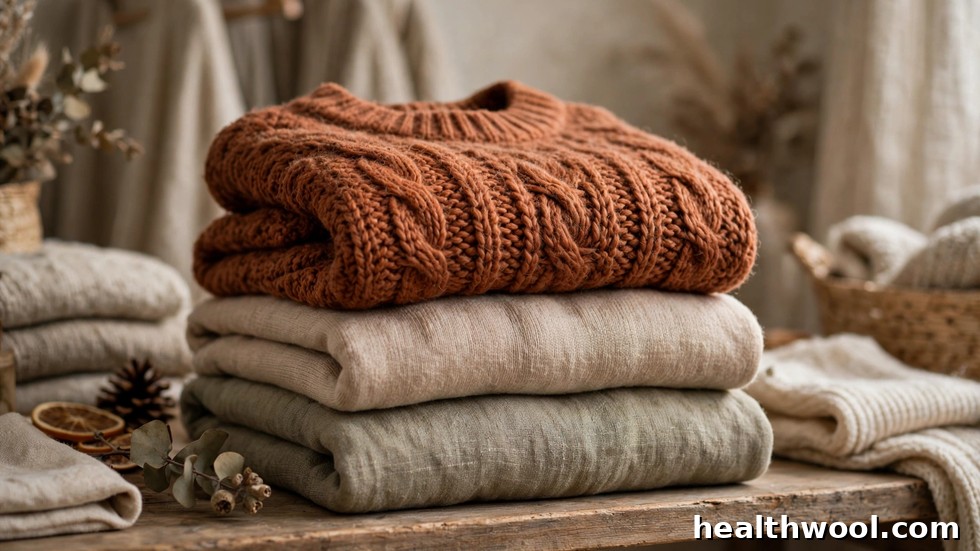
Wool is the most direct replacement for acrylic, and for good reason. It insulates beautifully, breathes as you warm up, and manages moisture without feeling clammy. Fine merino wool is soft enough for base layers and everyday sweaters, while lambswool and cashmere blends offer a luxurious feel for special pieces. If you remember scratchy wool from childhood, try a modern fine merino knit: the difference is dramatic.
Wool does need a little more care. Hand washing in lukewarm water and flat drying will keep it in shape for years. That sounds like effort, but in practice wool needs washing less often than acrylic, because it resists odour naturally. Airing a wool sweater overnight often refreshes it completely, which saves water, energy, and time.
Cost is the usual objection, and it is fair. A good wool sweater costs more than an acrylic one. The trick is to think in cost per wear: a wool sweater worn a hundred times over five winters is cheaper per wear than an acrylic sweater that pills, stretches, and is discarded after one season. Buying one good sweater instead of three cheap ones is often the better deal.
Cotton, Linen, and Everyday Comfort
Not every day needs wool. Cotton sweaters and knits are soft, easy to wash, and comfortable in mild weather and heated indoor spaces. Cotton is a good choice for people who find wool too warm indoors, or who want something they can toss in the machine without thinking too hard. Look for a good weight: very thin cotton knits can stretch out of shape, while a medium-weight knit holds up better.
Linen blends are wonderful for transitional weather. Linen breathes exceptionally well, though pure linen can feel crisp and wrinkle easily. A linen-cotton blend softens both issues, giving you breathability with a more relaxed drape. For summer evenings and warm autumn days, these blends are hard to beat.
Alpaca is another fibre worth knowing. It is warmer than sheep’s wool by weight, very soft, and often tolerated by people who find sheep’s wool irritating. It can be pricier and a little less hard-wearing than wool, so it suits special sweaters rather than everyday workhorses. Blends with wool combine alpaca softness with wool durability.
How to Switch Without Breaking the Bank
You do not need to throw everything away tomorrow. A gradual switch is kinder to your budget and to the planet. Start with the piece you wear most: the everyday sweater you reach for three times a week. Replace that one with a good natural-fibre version, and notice the difference over a month. Then replace the next most-worn piece, and so on.
Second-hand shops, charity shops, and vintage stores are treasure troves for natural-fibre knitwear. Wool and cashmere sweaters that have survived years of wear are often better quality than new budget pieces, and they cost a fraction of the original price. Check for moth holes, stretched cuffs, and pilling, but do not be put off by a little pilling: a fabric comb can tidy most knits quickly.
Sales and end-of-season clearances are another good route. Buy winter knitwear in spring, when shops clear stock, and look for timeless colours and classic cuts that will not date. A navy, cream, grey, or camel sweater in a simple shape will still look right in five years, while a novelty pattern may not.
Caring for Natural Fibres, Simply
Natural fibres reward gentle care, but gentle does not mean complicated. Wash wool by hand or on a gentle wool cycle, in lukewarm water with a mild detergent. Dry knitwear flat, reshaped to its measurements, and never hang a wet sweater. Fold knitwear for storage, and use cedar or lavender sachets to deter moths. Cotton knits can usually be machine washed on a gentle cycle and dried flat or on low heat.
Learn to spot-clean small marks instead of washing the whole garment. A damp cloth and a little mild soap will handle most everyday spots, and airing handles odour. The less you wash natural fibres, the longer they last and the better they feel.
Keep a small care kit: a fabric comb for pilling, a gentle detergent, and a mesh laundry bag. These three items cost very little and will extend the life of every natural garment you own. Good care is the real secret behind wardrobes that look good year after year.
What About Blends?
Blends are a practical middle ground, and there is no shame in them. A wool-acrylic blend may breathe better than pure acrylic and cost less than pure wool. A cotton-wool blend can offer softness with warmth. The key is to check the percentages: a sweater labelled as a wool blend that is only ten percent wool will behave mostly like acrylic. Look for a majority natural fibre, ideally fifty percent or more, for a noticeable comfort difference.
Some blends exist for durability: a small amount of nylon or elastane can help a sweater keep its shape. That is a reasonable trade-off for everyday pieces, especially socks and fitted knits. The goal is not purity for its own sake, but comfort, longevity, and a fabric that breathes and feels good against your skin.
When shopping, read the label closely, feel the fabric, and try it on. Move around, sit down, and notice whether it feels warm and close after a few minutes or comfortably breathable. Your body is a better judge than any marketing claim.
Key Takeaways
- Acrylic often feels clammy because it breathes poorly and traps sweat; it also pills, stretches, and builds static more than natural fibres.
- Wool is the closest natural replacement: warm, breathable, moisture-managing, and long-lasting with gentle care.
- Cotton suits mild weather and easy washing, linen blends suit transitional seasons, and alpaca offers extra softness and warmth.
- Switch gradually, starting with your most-worn piece, and explore second-hand and end-of-season options to keep costs down.
- Gentle washing, flat drying, and airing between wears keep natural knitwear comfortable for years.
- Check blend percentages: a majority natural fibre makes a real difference, while a token amount of wool will not.
Try a free calculator
Match this guide with a number: Tog Calculator · Weighted Blanket Calculator · Sleep Cycle Calculator

Disclaimer: Content on HealthWool.com is for informational, lifestyle, and thermal wellness purposes only. It is not a substitute for professional medical advice, diagnosis, or treatment.