Wool has a loyal following among people with sensitive skin, and also a few persistent warnings. At the centre of the debate sits lanolin, the natural waxy oil that coats sheep’s wool. Some sources call lanolin a common allergen to avoid at all costs. Others point out that true lanolin allergy is rare, and that most wool discomfort comes from coarse fibres, not from lanolin at all. So which is it? This article separates myths from facts, explains what lanolin actually is, and offers practical guidance for deciding whether raw or minimally processed wool belongs in your bedroom and wardrobe. As always, this is general information, not personal advice, and skin concerns deserve a qualified professional’s input.
What Is Lanolin, Exactly?
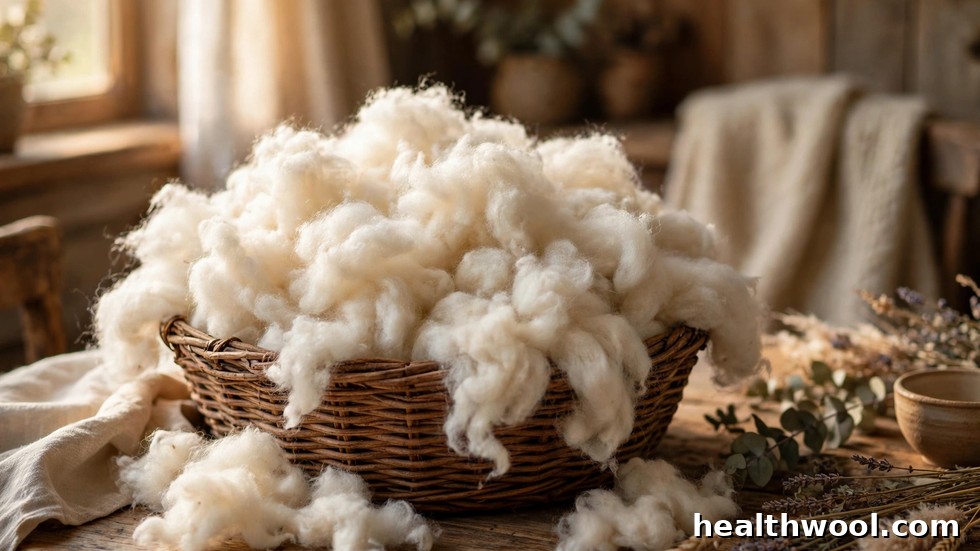
Lanolin is a natural substance secreted by sheep’s skin glands. It coats each wool fibre, protecting the sheep from rain and weather, and it gives raw, unwashed wool its slightly greasy feel and distinctive smell. When wool is processed for textiles, most lanolin is washed out during scouring, the cleaning stage that removes dirt, grease, and natural oils. Finished wool garments and bedding therefore contain far less lanolin than raw fleece straight from the sheep. Highly refined lanolin is also used in skincare, lip balms, and nipple creams, where it acts as an emollient that helps skin hold moisture.
The amount of lanolin left in a product depends on processing. Raw wool and hand-spun, minimally washed yarns retain the most. Commercially scoured wool retains very little. Wool that has been dyed, finished, and washed multiple times retains less still. This matters because discussions about lanolin often talk about raw wool and finished wool as if they were the same thing, when their lanolin content can differ enormously. A reaction to raw fleece does not automatically predict a reaction to a finished merino sweater.
Myth 1: Lanolin Allergy Is Common
This is the most repeated claim, and the evidence does not support it as stated. Studies of patch testing — where dermatologists test people with suspected skin allergies — consistently find lanolin allergy in a small minority of tested patients, typically in the low single digits, and often among people who already have damaged skin or other skin conditions. In the general population, true lanolin allergy is considered uncommon. That does not mean it never happens, but it does mean lanolin is not a widespread threat hiding in every wool blanket.
Part of the confusion comes from older, less refined lanolin. Decades ago, lanolin used in some products contained more impurities, including pesticide residues and oxidised components, which may have provoked more reactions. Modern refined lanolin is purer, and many patch-test reactions to older lanolin preparations do not translate into reactions to modern products. If you have been told you are lanolin-allergic based on an old test, it may be worth discussing retesting with a professional rather than assuming a lifelong ban on all wool.
Myth 2: Wool Irritation Means Lanolin Allergy
Most wool discomfort is not an allergy at all. Coarse wool fibres — those thicker than about 30 microns in diameter — can physically prickle the skin, triggering itch receptors without any immune reaction. This is sometimes called the prickle factor, and it explains why a chunky, rustic wool sweater can feel unbearably itchy while a fine merino base layer feels soft and comfortable. The difference is fibre diameter, not lanolin content. Fine merino fibres, typically under 20 microns, bend easily against the skin instead of poking it.
Other causes of wool discomfort include dry skin, heat, friction, and sensitivity to dyes or finishes used on the garment. A wool sweater that itches may be itchy because it is coarse, because it is warm and you are sweating, or because of a chemical finish — none of which implicates lanolin. This is why the classic advice for wool-sensitive people is to try fine merino first, worn over a smooth layer, rather than writing off all wool. Fibre fineness is usually the more important variable.
Myth 3: Raw Wool Is Dangerous for Sensitive Skin
Raw wool is not dangerous in any general sense, but it is the form of wool most likely to cause problems for sensitive people, for several reasons at once. It retains the most lanolin, it may carry dust, vegetable matter, and residues from the farm, and it has not been through the washing and finishing that soften commercial wool. People who handle raw fleece for spinning or crafting sometimes develop skin irritation from prolonged contact, and that experience understandably colours their view of all wool.
For bedding and clothing, though, raw wool is rarely what you are buying. Even wool marketed as natural or minimally processed has usually been scoured and cleaned. Truly raw wool bedding exists in niche markets, and it suits people who specifically want unprocessed fibre and understand its care needs. If your skin is sensitive, finished wool with a known fibre diameter is a more predictable choice than raw fleece, and washing any new wool item before use removes surface residues that could irritate.
Myth 4: If You React to Lanolin Creams, You Must Avoid Wool
This sounds logical, but it does not always follow. Lanolin in skincare is typically a concentrated, refined product applied directly to skin, often to damaged or broken skin, and left in place for hours. Wool bedding or clothing contains far smaller amounts of lanolin, and the fibre sits against skin through a cover or garment layer. Many people who react to a lanolin cream tolerate finished wool without issue, and vice versa. The exposure route, concentration, and skin condition all differ.
That said, if you have a confirmed lanolin allergy, caution makes sense. Choose well-scoured, finished wool, use a barrier layer such as a cotton cover or base layer, and test new items briefly before committing to a full night’s sleep in them. Keep a note of what you tried and how your skin responded. This kind of careful, personal testing — done gently, not by pushing through a strong reaction — is far more informative than blanket avoidance based on a single product experience.
What the Facts Say About Wool and Sensitive Skin
Interestingly, recent research has been kinder to wool than its scratchy reputation suggests. Studies on fine merino worn by people with eczema-prone skin have found that superfine merino can be well tolerated and may even be associated with improved comfort compared with cotton in some trials, possibly because of wool’s moisture management. This does not mean wool treats or improves skin conditions — it does not, and anyone making that claim is overreaching — but it does challenge the assumption that wool is automatically bad for sensitive skin.
The broader fact is that skin sensitivity is individual. Fibre diameter, lanolin content, dyes, finishes, fit, temperature, and your skin’s current condition all interact. Two people can wear the same sweater and have completely different experiences, and the same person can react differently in winter than in summer. That variability is normal, and it is why personal testing and professional advice matter more than sweeping rules about wool being good or bad.
Practical Guide: Trying Wool With Sensitive Skin
Start With Fine Merino
Look for merino labelled superfine or ultrafine, with fibre diameter under about 19 microns if the label states it. Choose smooth, flat-knit garments rather than chunky, hairy knits. A lightweight merino base layer is a good first test, worn for a few hours during the day before you try sleeping in wool bedding.
Use a Barrier Layer
A cotton pillowcase over a wool pillow, a cotton sheet over a wool underblanket, or a cotton T-shirt under a wool sweater all reduce direct fibre contact while preserving wool’s moisture and warmth benefits. Barrier layers are simple, cheap, and effective, and they make wool accessible to many people who find direct contact uncomfortable.
Wash Before First Use
Follow the care label and wash new wool items gently before wearing or sleeping in them. This removes surface dust, loose fibres, and processing residues. Avoid harsh detergents and fabric softeners, which can leave their own irritating residues, and rinse thoroughly.
Watch, Don’t Push Through
If an item causes itching, redness, or discomfort, remove it and let your skin settle. Note what you wore, for how long, and what happened. Mild, brief itching from a coarse knit is different from a spreading rash, and persistent or worsening reactions deserve professional assessment rather than repeated exposure in the hope of building tolerance.
Key Takeaways
- True lanolin allergy is uncommon; most wool itch comes from coarse fibres physically prickling the skin.
- Finished wool contains far less lanolin than raw fleece, so a reaction to one does not predict a reaction to the other.
- Fine merino, under about 20 microns, is usually much better tolerated than coarse, rustic wool.
- Barrier layers, gentle washing before use, and short initial tests make trying wool safer for sensitive skin.
- Persistent, spreading, or painful reactions should be assessed by a qualified professional, not self-diagnosed.
So, is raw wool safe for sensitive skin? The honest answer is that finished, fine wool is safe and comfortable for most people with sensitive skin, while truly raw wool is a less predictable choice that deserves caution. Lanolin has been given more blame than the evidence supports, and fibre fineness has received less attention than it deserves. If you love the warmth and moisture management of wool but have hesitated because of its reputation, a fine merino layer, a cotton barrier, and a gentle first test may be all you need to find out whether wool can be part of your cozy, comfortable life.
Try a free calculator
Match this guide with a number: Tog Calculator · Weighted Blanket Calculator · Sleep Cycle Calculator



Disclaimer: Content on HealthWool.com is for informational, lifestyle, and thermal wellness purposes only. It is not a substitute for professional medical advice, diagnosis, or treatment.